• A DOPE Theme
  • Guilla4Life Radio
    • Reading Is D.O.P.E. Podcast
  • A D.O.P.E. Mission....
  • Reading Is D.O.P.E. Book Boxes
  • D.O.P.E. Digital University
  • The D.O.P.E. Bookshelf
  • D.O.P.E. Merch and More
  • D.O.P.E. Reading Programs
    • Metro East Literacy Project
    • The Literacy Center
  • Contact Us

Guilla Boyz Entertainment, L.L.C.

notes
0:00/???
  1. 1
    Sunday Night Soul (1-8-23) 2:01:53
    Sunday Night Soul (1-8-23)
    by G4L Radio

    Share link

    0:00/2:01:53
  2. 2
    Sunday Night Soul (8-28-22) 1:57:27
    Sunday Night Soul (8-28-22)
    by G4L Radio

    Share link

    0:00/1:57:27
  3. 3
    Sunday Night Soul (5-22-22) 1:59:51
    Sunday Night Soul (5-22-22)
    by G4L Radio

    Share link

    0:00/1:59:51
  4. 4
    Sunday Night Soul 11-7-21 2:01:55
    Sunday Night Soul 11-7-21
    by G4LRadio

    Share link

    0:00/2:01:55
  5. 5
    Sunday Night Soul (4-18--21) 1:56:42
    Sunday Night Soul (4-18--21)
    by GB Radio

    Share link

    0:00/1:56:42
  6. 6
    Sunday Night Soul (5-8-22) 1:53:54
    Sunday Night Soul (5-8-22)
    by G3L Radio

    Share link

    0:00/1:53:54
  7. 7
    Sunday Night Soul (5-2-21) 2:02:27
    Sunday Night Soul (5-2-21)
    by GB Radio

    Share link

    0:00/2:02:27
  8. 8
    Sunday Night Soul (5-9-21) 2:01:55
    Sunday Night Soul (5-9-21)
    by GB Radio

    Share link

    0:00/2:01:55
  9. 9
    Sunday Night Soul (5-8-22) 1:53:54
    Sunday Night Soul (5-8-22)
    by G4L Radio

    Share link

    0:00/1:53:54
  10. 10
    Sunday Night Soul (5-16-21) 2:01:27
    Sunday Night Soul (5-16-21)
    by GB Radio

    Share link

    0:00/2:01:27
  11. 11
    Sunday Night Soul (12-26-21) 1:58:37
    Sunday Night Soul (12-26-21)
    by G4L Radio

    Share link

    0:00/1:58:37
  12. 12
    Sunday Night Soul (2-20-21 1:59:42
    Sunday Night Soul (2-20-21
    by GB Radio

    Share link

    0:00/1:59:42
  13. 13
    Sunday Night Soul (4-25-21) 2:16:41
    Sunday Night Soul (4-25-21)
    by GB Radio

    Share link

    0:00/2:16:41
0:00/???
  • A DOPE Theme
  • Guilla4Life Radio
    • Reading Is D.O.P.E. Podcast
  • A D.O.P.E. Mission....
  • Reading Is D.O.P.E. Book Boxes
  • D.O.P.E. Digital University
  • The D.O.P.E. Bookshelf
  • D.O.P.E. Merch and More
  • D.O.P.E. Reading Programs
    • Metro East Literacy Project
    • The Literacy Center
  • Contact Us

Viewing: Social Psychology - View all posts

Amusing Ourselves to Death by Neil Postman 

In Amusing Ourselves to Death, Neil Postman examines what happens when entertainment becomes the guiding principle of public life. He frames his argument through two visions of social control: George Orwell’s 1984, where power suppresses information, and Aldous Huxley’s Brave New World, where people surrender their independence through pleasure and distraction. Postman argues that Huxley’s warning better captures television culture. A society can have access to information yet become so absorbed in amusement that it loses the desire to question, reflect, and understand.
 

To show how public expectations changed, Postman revisits the Lincoln–Douglas debates, describing audiences willing to follow hours of speeches and rebuttals. He associates that patience with a culture shaped by reading and sustained argument. Television, he argues, pushes politics toward appearance, personality, and emotional appeal. Candidates become celebrities, and political commercials package complicated problems as if their solutions were products for sale. His support for banning political television advertisements reflects his concern that selling a candidate’s image can displace meaningful evaluation of their ideas and abilities.


His criticism also reaches educational programming, particularly Sesame Street. Postman questions what children learn about learning itself when instruction consistently arrives through entertaining segments. He worries that they will expect education to avoid difficulty, boredom, and sustained effort. This reveals a crucial distinction in his argument: openly entertaining shows are less troubling to him than programs that claim to educate or inform while adopting entertainment’s rules. News, politics, religion, and education can retain the appearance of seriousness even as their substance becomes fragmented and superficial.


Ultimately, Postman challenges us to examine how our media shape what we consider worth knowing—and how much effort we are willing to invest in understanding it. Applied to today’s scrolling feeds, viral clips, and personality-driven commentary, his warning invites a question: When knowledge must constantly compete as entertainment, what happens to truths that require patience? The book asks us to recognize the difference between being engaged by a presentation and being equipped to think more deeply about the world.


The GUILLA Reflection 


How have your media habits shaped your ability to engage with ideas that require patience, sustained attention, and discomfort—and are you truly becoming more informed, or simply more entertained?


#ReadingIsDOPE

#DOPELiteracyProject

#DOPEBookshelf


10/31/2026

  • Leave a comment
  • Share
    Amusing Ourselves to Death by Neil Postman

    Share link

in Books , Thoughts Become Reality, Morality, Pop Culture, Media , Psychology, Influence , Conspiracies , Conspiracy Theories , Marketing, Strategy, Social Psychology, Culture, Cognitive Behavioral Therapy

The Undiscovered Self by Carl Jung 

In The Undiscovered Self, Carl Gustav Jung argues that people who lack self-understanding are more vulnerable to conformity and collective pressure. Preserving individuality requires examining the unconscious motives shaping our beliefs and behavior instead of allowing society to define who we are.


Jung views dreams as a doorway into deeper self-knowledge. They can reveal neglected emotions, unresolved conflicts, and possibilities our conscious minds overlook. Understanding them requires personal reflection rather than assuming every symbol has a universal meaning.


This offers a connection to DOPE’s Dreams pillar: greater self-awareness can help us recognize aspirations that reflect who we are and what matters to us. Exploring our inner world can help give those dreams a more conscious sense of purpose.


Self-discovery also means confronting the shadow—the qualities we resist acknowledging within ourselves. Recognizing these contradictions helps us accept responsibility instead of projecting our shortcomings onto others. Ultimately, Jung connects knowing ourselves with thinking independently, choosing deliberately, and treating others with greater understanding.
 

The GUILLA Reflection 


What might your dreams be revealing about yourself that you have yet to acknowledge in your waking life?
 

#DOPEBookshelf

#ReadingIsDOPE

#DOPEBookshelf
 

10/25/2026

  • Leave a comment
  • Share
    The Undiscovered Self by Carl Jung

    Share link

in Books , Reading, Mental Health, Audiobooks , Philosophy , Psychology, Education, Spirituality , Social Psychology

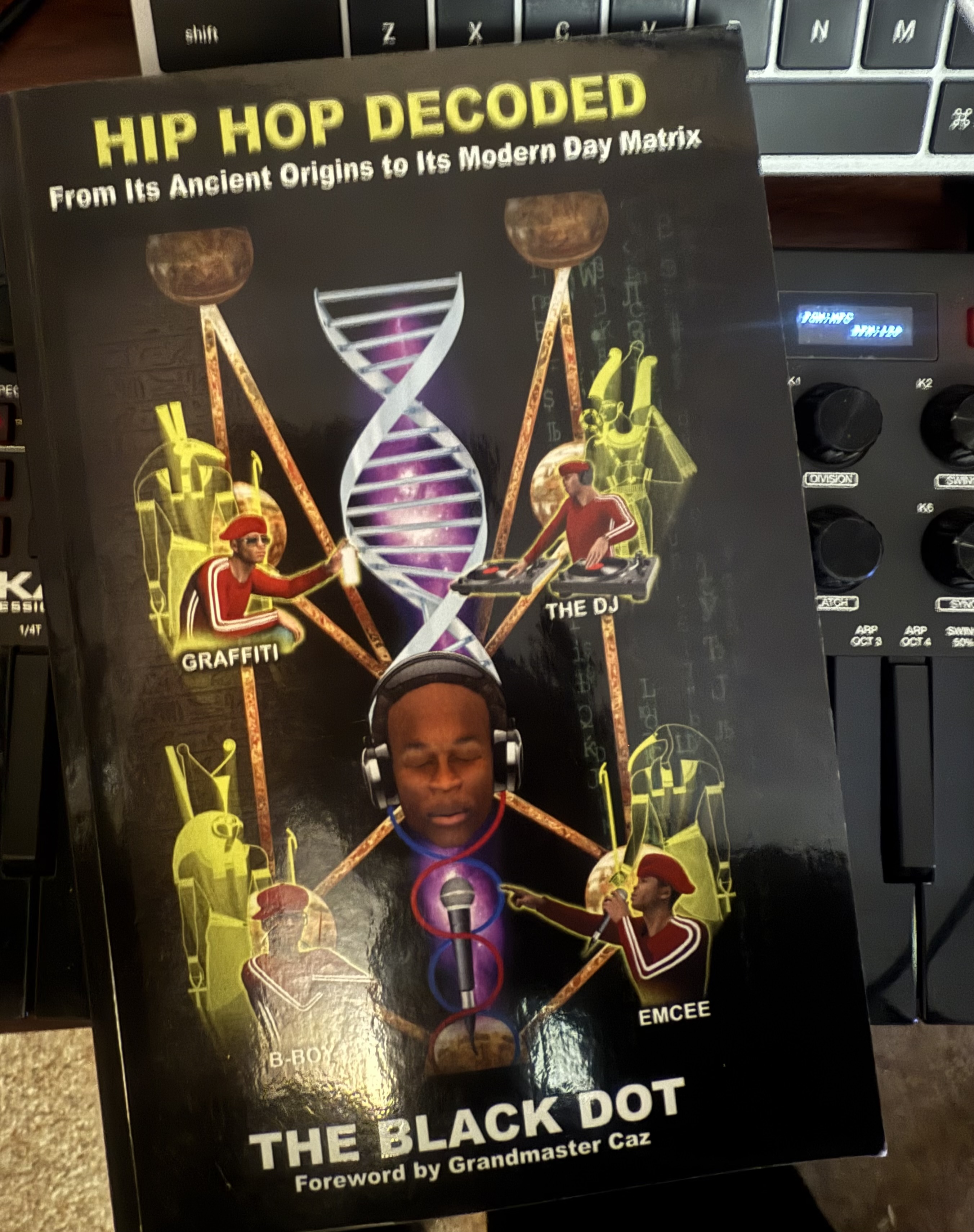
Hip Hop Decoded by The Black Dot 


Hip Hop Decoded argues that hip hop is not simply a musical genre but the rebirth of an ancient African cultural system rooted in rhythm, cosmology, spiritual science, and communal storytelling. The Black Dot traces hip hop’s essence to ancestral practices where sound, movement, and vibration were used to shape consciousness and connect with higher realms. Modern hip hop—through emceeing, DJing, breaking, graffiti, and ciphers—represents a continuation of this ancient frequency, re-emerging in a new form. At its core, he asserts, hip hop is a metaphysical technology, a coded language that carries spiritual knowledge disguised within contemporary expression.


The book also examines how hip hop operates inside what The Black Dot refers to as “the matrix,” a system of corporate, political, and media forces designed to exploit, redirect, and weaponize cultural energy. As hip hop’s influence grew, these forces sought to distort its original purpose, replacing consciousness with materialism and revolutionary spirit with commodified entertainment. To illustrate how powerful energies are manipulated on a global scale, The Black Dot highlights the metaphysical significance of the name Michael, meaning “Who is like God?” He argues that the simultaneous rise of Michael Jordan, Michael Jackson, and Mike Tyson during the 1980s and early 1990s was not accidental—it represented the embodiment of a divine warrior archetype manifesting in modern form.


Each of these men became a symbol of Black excellence operating at a godlike level: Jordan as the heroic athlete, Jackson as the otherworldly performer, and Tyson as the unstoppable warrior. Yet, all three experienced dramatic and highly publicized downfalls around the mid-1990s. According to The Black Dot, this synchronicity reflects a symbolic ritual—a deliberate cultural “humbling” of the “Michael” archetype. Their trials, accusations, scandals, or tragedies were not isolated incidents but part of a broader metaphysical pattern in which forces within the matrix seek to diminish or destabilize figures who carry too much spiritual or cultural power. In this reading, the fall of these three Michaels served to disrupt the collective belief in Black godhood, reminding the world that no figure is allowed to rise unchecked.


Ultimately, Hip Hop Decoded is a call for the reclamation of hip hop’s spiritual and revolutionary essence. By decoding the symbolism embedded in the culture and recognizing the systems that work to manipulate it, individuals can reclaim their creative power and restore hip hop to its role as a vehicle for enlightenment. The Black Dot urges artists and listeners alike to awaken to the deeper metaphysical currents running through the culture, to understand the coded messages hidden in plain sight, and to use hip hop as a tool of liberation rather than a product of control.


The GUILLA Reflection 

How much of what we consume as entertainment is actually shaping our consciousness, beliefs, and identity—and how might recognizing the deeper symbolism within popular culture change the way we perceive its influence?


Click the image below to get yours!

#ReadingIsDOPE

#DOPEBookshelf

11/24/2025

  • Leave a comment
  • Share
    Hip Hop Decoded by The Black Dot

    Share link

in Reading, Music , Purpose, Morality, Pop Culture, Media , Psychology, Influence , Hip Hop, Conspiracies , Teaching , Conspiracy Theories , Education, Marketing, Leadership, Spirituality , Strategy, Social Psychology, Supreme Mathematics , Hip-Hop, Culture

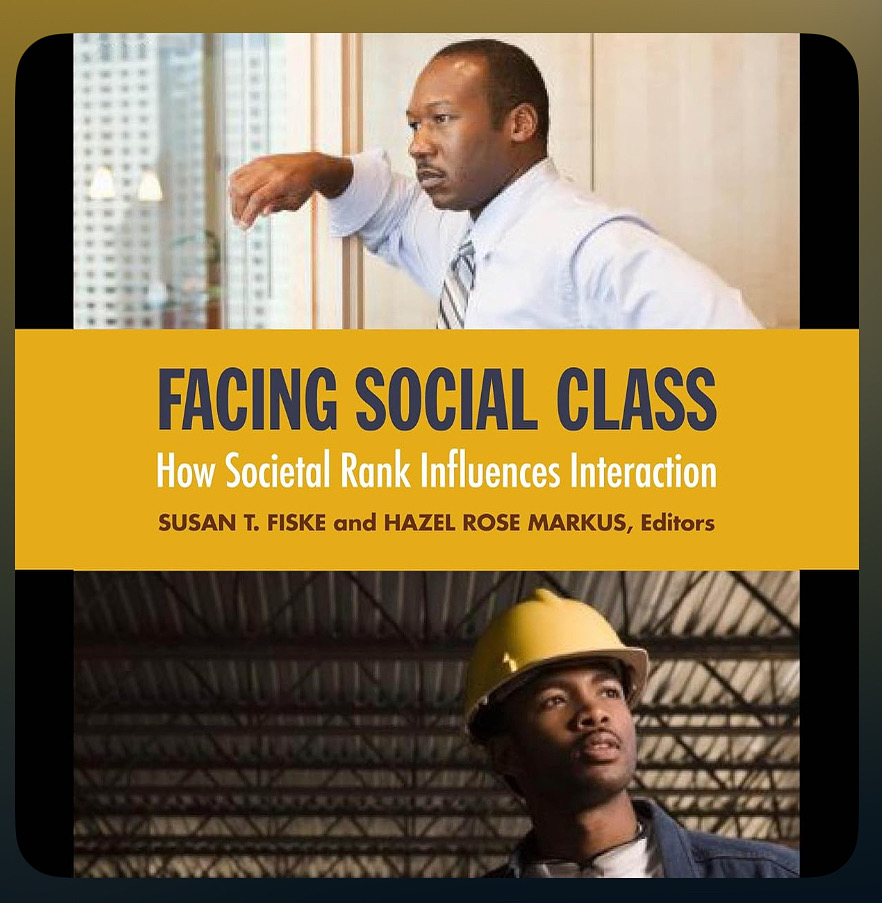
Facing Social Class: How Societal Rank Influences Interaction by Susan Fiske and Hazel Rose Markus 


When we think about inequality, we often jump straight to race or gender. But in Facing Social Class, Susan Fiske and Hazel Rose Markus remind us that social class is just as powerful in shaping people’s lives. Class isn’t just about how much money you make—it affects your values, your behaviors, and even how you see yourself and others. The book gives us a clear lens to understand how class operates as a hidden force in everyday life.


One of the key points they make is that class differences show up in how people communicate and relate. Folks from working-class backgrounds often emphasize community and “we,” while middle- and upper-class individuals tend to highlight independence and “me.” Neither is better or worse, but when these values clash—whether in schools, workplaces, or health care—they can create misunderstandings that reinforce stereotypes and widen divides.i


The authors also show how institutions often reflect upper-class norms, which makes it harder for working-class individuals to feel included or to succeed. Think about how schools reward certain types of speech, or how corporations expect certain “professional” behaviors. These aren’t neutral—they reflect cultural values of higher social classes. To create fairness, institutions have to adapt and recognize the strengths of different class perspectives instead of forcing everyone into one mold.


In the end, Facing Social Class isn’t just a critique—it’s a call to action. By paying attention to class, we can better understand how opportunity is distributed, challenge our own assumptions, and work to bridge divides. Fiske and Markus encourage us to build empathy across class lines and push for structures that allow everyone—not just the privileged few—to thrive.


#AudioBooksAreDOPE

#DOPEBookshelf

#ReadingIsDOPE


09/16/2025

  • Leave a comment
  • Share
    Facing Social Class: How Societal Rank Influences Interaction by Susan Fiske and Hazel Rose Markus

    Share link

in Audiobooks , Media , Psychology, Influence , Education, Social Psychology, Social Class

The Human Brand: How We Relate to People, Products, and Companies (Audiobook) by Chris Malone and Susan T. Fiske 

In The Human Brand, Chris Malone and Susan T. Fiske reveal a timeless truth: people judge companies and brands the same way they judge other people — through the lens of warmth and competence. Warmth shows customers you care about their well-being and have good intentions; competence shows you can actually deliver on what you promise. Just like the old saying goes, “People don’t care what you know until they know that you care.” Without warmth, even the most skilled company can feel cold and transactional, driving customers away instead of drawing them in.


The authors share vivid examples of brands that get this balance right, like Zappos, Starbucks, and Amazon — companies that show up consistently, do what they say they will do, and treat customers like human beings, not just dollar signs. In our digital age, customers have more power than ever to hold companies accountable. A lack of genuine care is hard to hide and quick to backfire. But when brands act with authenticity and empathy, they spark the kind of trust and loyalty that traditional marketing alone can’t buy.


Reading this really hits home because it reminds us to look at our own businesses and ask: Do my customers feel like I genuinely care? The warmth-and-competence lens can be a simple but powerful gut check. It’s not about grand gestures — it’s often the little things: listening more, being honest when things go wrong, and treating people like people. Those small moments add up to relationships that last.


Ultimately, The Human Brand is a call to remember that business, at its core, is human. Technology may change how we connect, but trust is still built the old-fashioned way — by showing you care and following through on your word. Brands that embrace this simple truth won’t just survive; they’ll stand out and thrive.


#DOPEAudiobooks

#DOPEBookshelf

#ReadingIsDOPE


07/09/2025

  • Leave a comment
  • Share
    The Human Brand: How We Relate to People, Products, and Companies (Audiobook) by Chris Malone and Susan T. Fiske

    Share link

in Books , Audiobooks , Psychology, Influence , Education, Leadership, Strategy, Social Psychology

Follow ya DREAMS, Embrace OPPORTUNITIES, Find ya PURPOSE & Seek EDUCATION

 #BeDOPEbyAnyMeans

Gifted Unique Individuals Livin' Life Accomplishin' (#Guilla4Life)

Some images ©

  • Log out