• A DOPE Theme
  • Guilla4Life Radio
    • Reading Is D.O.P.E. Podcast
  • A D.O.P.E. Mission....
  • Reading Is D.O.P.E. Book Boxes
  • D.O.P.E. Digital University
  • The D.O.P.E. Bookshelf
  • D.O.P.E. Merch and More
  • D.O.P.E. Reading Programs
    • Metro East Literacy Project
    • The Literacy Center
  • Contact Us

Guilla Boyz Entertainment, L.L.C.

notes
0:00/???
  1. 1
    Sunday Night Soul (1-8-23) 2:01:53
    Sunday Night Soul (1-8-23)
    by G4L Radio

    Share link

    0:00/2:01:53
  2. 2
    Sunday Night Soul (8-28-22) 1:57:27
    Sunday Night Soul (8-28-22)
    by G4L Radio

    Share link

    0:00/1:57:27
  3. 3
    Sunday Night Soul (5-22-22) 1:59:51
    Sunday Night Soul (5-22-22)
    by G4L Radio

    Share link

    0:00/1:59:51
  4. 4
    Sunday Night Soul 11-7-21 2:01:55
    Sunday Night Soul 11-7-21
    by G4LRadio

    Share link

    0:00/2:01:55
  5. 5
    Sunday Night Soul (4-18--21) 1:56:42
    Sunday Night Soul (4-18--21)
    by GB Radio

    Share link

    0:00/1:56:42
  6. 6
    Sunday Night Soul (5-8-22) 1:53:54
    Sunday Night Soul (5-8-22)
    by G3L Radio

    Share link

    0:00/1:53:54
  7. 7
    Sunday Night Soul (5-2-21) 2:02:27
    Sunday Night Soul (5-2-21)
    by GB Radio

    Share link

    0:00/2:02:27
  8. 8
    Sunday Night Soul (5-9-21) 2:01:55
    Sunday Night Soul (5-9-21)
    by GB Radio

    Share link

    0:00/2:01:55
  9. 9
    Sunday Night Soul (5-8-22) 1:53:54
    Sunday Night Soul (5-8-22)
    by G4L Radio

    Share link

    0:00/1:53:54
  10. 10
    Sunday Night Soul (5-16-21) 2:01:27
    Sunday Night Soul (5-16-21)
    by GB Radio

    Share link

    0:00/2:01:27
  11. 11
    Sunday Night Soul (12-26-21) 1:58:37
    Sunday Night Soul (12-26-21)
    by G4L Radio

    Share link

    0:00/1:58:37
  12. 12
    Sunday Night Soul (2-20-21 1:59:42
    Sunday Night Soul (2-20-21
    by GB Radio

    Share link

    0:00/1:59:42
  13. 13
    Sunday Night Soul (4-25-21) 2:16:41
    Sunday Night Soul (4-25-21)
    by GB Radio

    Share link

    0:00/2:16:41
0:00/???
  • A DOPE Theme
  • Guilla4Life Radio
    • Reading Is D.O.P.E. Podcast
  • A D.O.P.E. Mission....
  • Reading Is D.O.P.E. Book Boxes
  • D.O.P.E. Digital University
  • The D.O.P.E. Bookshelf
  • D.O.P.E. Merch and More
  • D.O.P.E. Reading Programs
    • Metro East Literacy Project
    • The Literacy Center
  • Contact Us

Viewing: Pop Culture - View all posts

Remember the Times by Teddy Riley (Audiobook Summary) 

In Remember the Times, Teddy Riley chronicles his remarkable journey from a young musician in Harlem to one of the most influential producers in music history. The memoir traces his early breakthrough producing for Kool Moe Dee, a pivotal opportunity that introduced his innovative production style to the industry and laid the foundation for what would become the revolutionary New Jack Swing sound. Riley explains how blending hip-hop’s hard-hitting rhythms with the soul of R&B transformed popular music and opened doors to collaborations with artists such as Keith Sweat, Guy, Bobby Brown, Michael Jackson, Whitney Houston, and eventually Blackstreet.
 

As Riley’s career evolved, so did his influence. The book provides a behind-the-scenes look at the creation of timeless records, culminating in one of his biggest achievements—“No Diggity” by Blackstreet. Rather than presenting success as an overnight phenomenon, Riley illustrates how years of experimentation, persistence, and continuous refinement of his craft ultimately led to some of the most recognizable music of the 1980s and 1990s. His story demonstrates that innovation often comes from building upon previous opportunities rather than chasing trends.
 

Equally compelling are Riley’s candid reflections on the business side of the music industry. He recounts his tumultuous relationship with his longtime manager, Gene, describing how misplaced trust, financial mismanagement, and the theft of earnings threatened both his career and his legacy. These experiences serve as a powerful reminder that creative talent alone is not enough; artists must also understand contracts, publishing, ownership, and financial management to protect what they create.


Ultimately, Remember the Times is more than the autobiography of a legendary producer—it is a blueprint for creative excellence and business wisdom. Teddy Riley’s journey reminds readers that lasting success is built through innovation, resilience, collaboration, and ownership. Whether you’re an artist, entrepreneur, producer, or creative professional, the memoir offers valuable lessons about mastering your craft while safeguarding your legacy.
 

#DOPEBookshelf

#AudioBooksAreDOPE

#DOPELiteracyProject

#ReadingIsDOPE

07/08/2026

  • Leave a comment
  • Share
    Remember the Times by Teddy Riley (Audiobook Summary)

    Share link

in Music , Audiobooks , Pop Culture, Media , Influence , Hip Hop, Audio Engineering , Hip-Hop, Culture

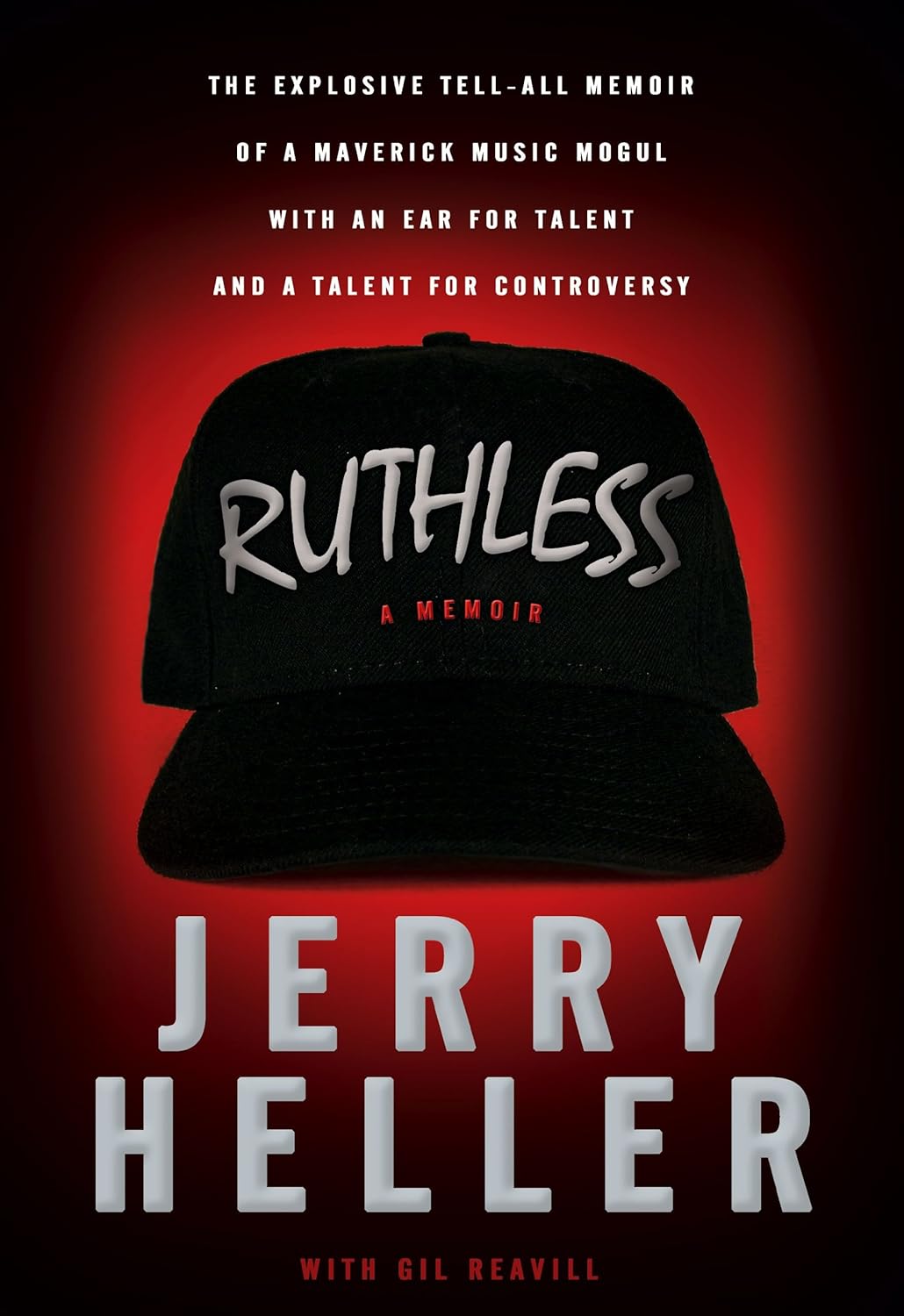
Ruthless by Jerry Heller 

Ruthless by Jerry Heller is a firsthand account of the rise of West Coast hip-hop, centered on his management of N.W.A and the creation of Ruthless Records alongside Eazy-E. Heller presents himself as the experienced industry figure who helped transform a group of young artists into a cultural force. He frames N.W.A’s success—especially with Straight Outta Compton—as a combination of raw street authenticity and strategic business execution that disrupted both the music industry and mainstream America.


The book emphasizes the business side of hip-hop, particularly the importance of contracts, ownership, and financial structure. Heller argues that he played a key role in protecting the group’s interests and building a profitable enterprise, while also acknowledging the growing tensions within the group. Disputes over money and management led to major departures, including Ice Cube and later Dr. Dre, highlighting how unclear expectations and financial mistrust can fracture even the most successful collaborations.
 

A major theme in Ruthless is the idea of competing narratives. Heller wrote the book in part to challenge how he was portrayed in the Straight Outta Compton, where he was depicted as exploitative. In contrast, he portrays himself as a stabilizing force who brought legitimacy and structure to a volatile environment. This tension underscores a broader point: history, especially in entertainment, is often shaped by perspective, power, and who controls the story.
 

Ultimately, Ruthless is more than a music memoir—it’s a case study in the intersection of culture, business, and power. It shows how groundbreaking art can reshape society, but also how success introduces new pressures around money, control, and legacy. The book leaves readers with a clear takeaway: talent may spark movements, but business decisions determine who benefits from them in the long run.

Click the image below!

#ReadingIsDOPE

#DOPEBookshelf

03/22/2026

  • Leave a comment
  • Share
    Ruthless by Jerry Heller

    Share link

in Books , Music , Pop Culture, Influence , Hip Hop, Conspiracies , Black Boys, Teaching , Education, Leadership, Strategy, Audio Engineering , Hip-Hop

Designing the Mind: The Principles of Psychitecture — Ryan A. Bush (Audiobook) 

In Designing the Mind, Ryan A. Bush introduces a powerful idea: your mind is not something you simply “have” — it’s something you can intentionally design. He calls this process psychitecture, the architecture of the psyche. Just like a building is constructed from beams, pillars, and blueprints, your thoughts, beliefs, and values form a mental structure. When parts of that structure are weak, outdated, or contradictory, you experience anxiety, procrastination, confusion, or internal conflict. The key is not to suppress emotions — it’s to redesign the structure underneath them.

Bush explains that emotions are not random. They’re responses to the beliefs you hold — often beliefs you’ve never examined. If you believe failure defines your worth, you’ll fear taking risks. If you believe success will isolate you, you’ll subconsciously sabotage growth. Many of our mental struggles come from hidden contradictions inside our belief system. Psychitecture teaches you how to surface those contradictions, question them, and replace them with more coherent, reality-aligned beliefs.

Another major theme is values. Most people inherit their values from culture, family, or circumstance without consciously choosing them. Bush argues that clearly defining your values is like installing load-bearing pillars in your mental structure. When your goals, identity, and daily actions align with chosen values, your mind becomes stable and resilient. Without that alignment, you feel scattered and reactive.

Ultimately, the book reframes personal development. It’s not about “finding yourself.” It’s about designing yourself. You are both the architect and the building. And if you’re willing to examine your mental blueprint, you can intentionally construct a mind that supports clarity, purpose, and long-term flourishing.


Tap the image below and purchase yours today!
 

#ReadingIsDOPE

#AudioBooksAreDOPE

#DOPEBookshelf

02/22/2026

  • Leave a comment
  • Share
    Designing the Mind: The Principles of Psychitecture — Ryan A. Bush (Audiobook)

    Share link

in Books , Mental Health, Audiobooks , Philosophy , Morality, Pop Culture, Education, Value Creation, Cognitive Behavioral Therapy , Psychitecture

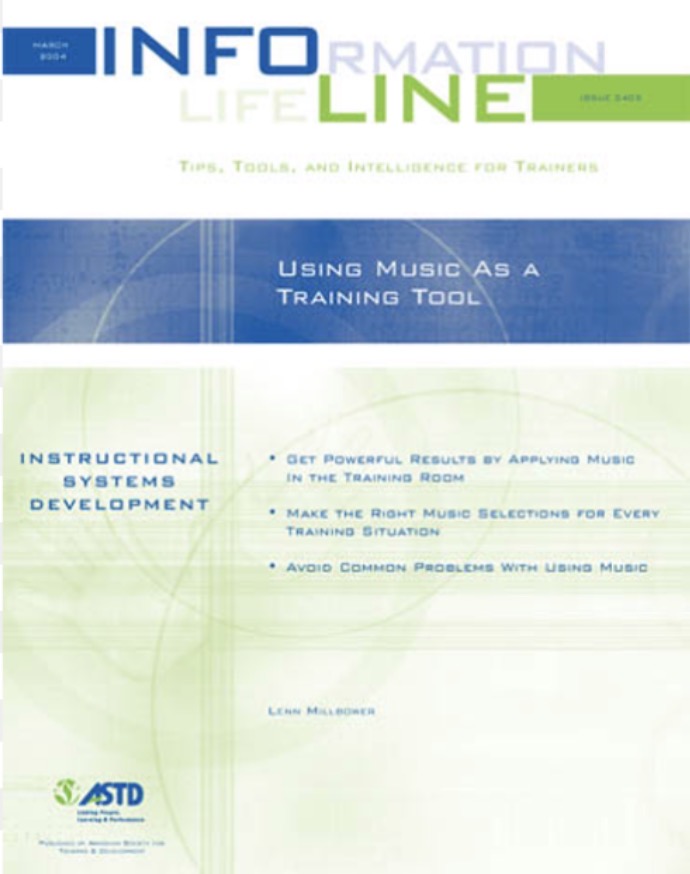
Using Music as an Instructional Tool 


Using Music as an Instructional Tool presents music as an intentional component of instructional systems design rather than background enhancement. The infoline explains how music can increase attention, reduce anxiety, support emotional engagement, and improve memory when aligned with learning objectives. By influencing mood and cognitive readiness, music helps create learning environments that are more receptive, structured, and memorable.


A particularly useful contribution of the infoline is its breakdown of how different musical genres affect learning in different ways. It notes that instrumental and classical music can support focus and analytical thinking, ambient music can reduce stress and encourage reflection, and upbeat styles can energize collaborative or interactive activities. This genre-based framework helps instructors move beyond intuition and select music that supports specific instructional goals.


However, the infoline’s portrayal of rap as primarily energetic or angry highlights an important limitation in genre-based categorization. While that description may apply to certain subgenres, it does not represent rap as a whole, nor does it reflect the broader emotional and instructional range found within Hip Hop culture—especially given that many learners do not separate the two. Conscious rap, jazz rap, lo-fi hip hop, narrative-driven, and instrumental forms can support reflection, storytelling, language development, and deep engagement, particularly for culturally connected learners.


This insight ultimately strengthens the instructional model. Rather than relying solely on genre labels, effective instructional design evaluates musical characteristics such as tempo, rhythm, lyrical density, emotional tone, and cultural relevance. When applied thoughtfully, rap and hip hop function as powerful, culturally responsive instructional tools. Recognizing this diversity expands the infoline’s framework and reinforces the idea that music—when chosen with intention—can align emotion, cognition, and culture into a more inclusive and effective learning experience.


#DOPEBookshelf

#ReadingIsDOPE

#DOPEMusicTherapy

12/14/2025

  • Leave a comment
  • Share
    Using Music as an Instructional Tool

    Share link

in Music , Purpose, Pop Culture, Psychology, Hip Hop, Teaching , Education, Audio Engineering , Hip-Hop

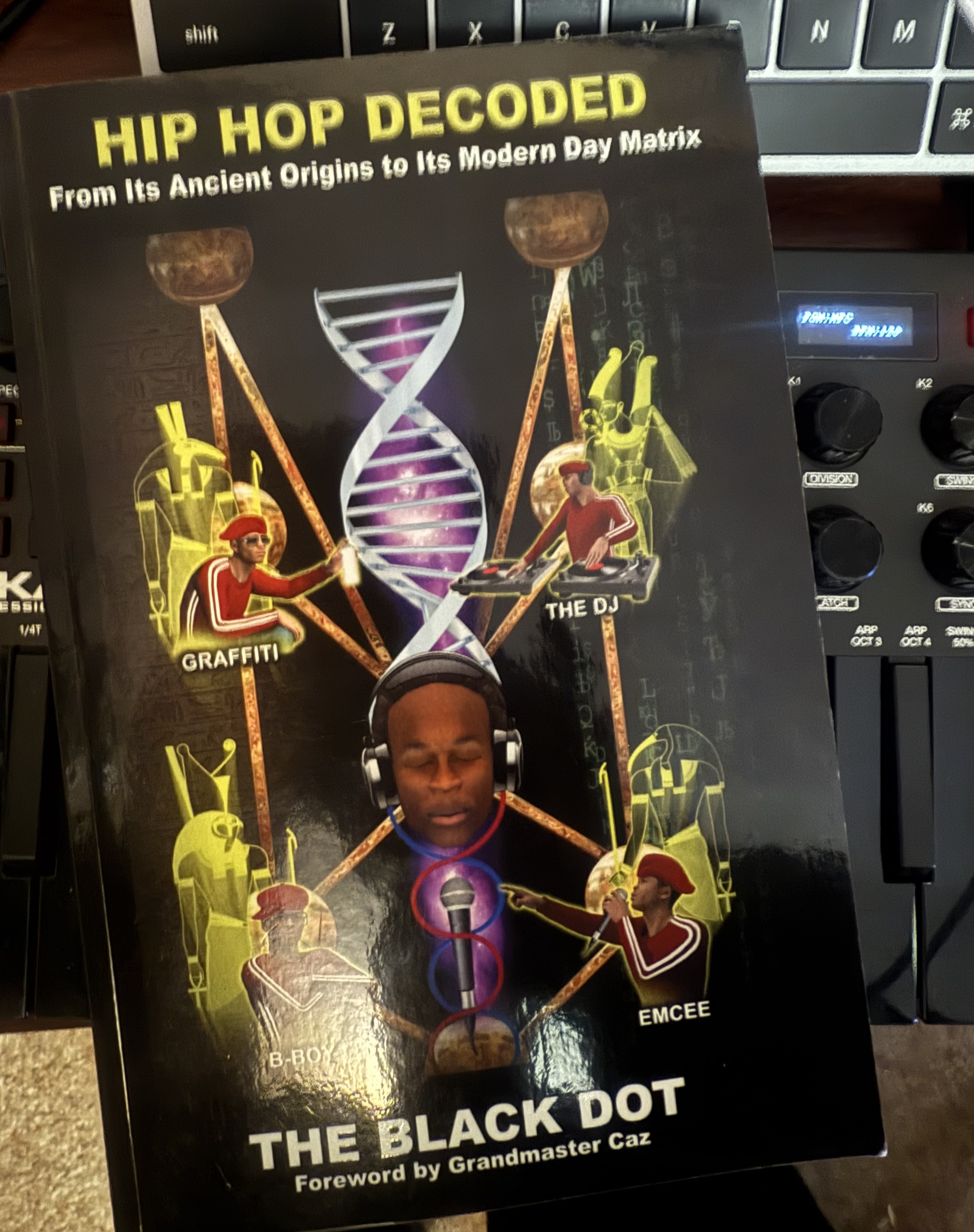
Hip Hop Decoded by The Black Dot 


Hip Hop Decoded argues that hip hop is not simply a musical genre but the rebirth of an ancient African cultural system rooted in rhythm, cosmology, spiritual science, and communal storytelling. The Black Dot traces hip hop’s essence to ancestral practices where sound, movement, and vibration were used to shape consciousness and connect with higher realms. Modern hip hop—through emceeing, DJing, breaking, graffiti, and ciphers—represents a continuation of this ancient frequency, re-emerging in a new form. At its core, he asserts, hip hop is a metaphysical technology, a coded language that carries spiritual knowledge disguised within contemporary expression.


The book also examines how hip hop operates inside what The Black Dot refers to as “the matrix,” a system of corporate, political, and media forces designed to exploit, redirect, and weaponize cultural energy. As hip hop’s influence grew, these forces sought to distort its original purpose, replacing consciousness with materialism and revolutionary spirit with commodified entertainment. To illustrate how powerful energies are manipulated on a global scale, The Black Dot highlights the metaphysical significance of the name Michael, meaning “Who is like God?” He argues that the simultaneous rise of Michael Jordan, Michael Jackson, and Mike Tyson during the 1980s and early 1990s was not accidental—it represented the embodiment of a divine warrior archetype manifesting in modern form.


Each of these men became a symbol of Black excellence operating at a godlike level: Jordan as the heroic athlete, Jackson as the otherworldly performer, and Tyson as the unstoppable warrior. Yet, all three experienced dramatic and highly publicized downfalls around the mid-1990s. According to The Black Dot, this synchronicity reflects a symbolic ritual—a deliberate cultural “humbling” of the “Michael” archetype. Their trials, accusations, scandals, or tragedies were not isolated incidents but part of a broader metaphysical pattern in which forces within the matrix seek to diminish or destabilize figures who carry too much spiritual or cultural power. In this reading, the fall of these three Michaels served to disrupt the collective belief in Black godhood, reminding the world that no figure is allowed to rise unchecked.


Ultimately, Hip Hop Decoded is a call for the reclamation of hip hop’s spiritual and revolutionary essence. By decoding the symbolism embedded in the culture and recognizing the systems that work to manipulate it, individuals can reclaim their creative power and restore hip hop to its role as a vehicle for enlightenment. The Black Dot urges artists and listeners alike to awaken to the deeper metaphysical currents running through the culture, to understand the coded messages hidden in plain sight, and to use hip hop as a tool of liberation rather than a product of control.


Click the image below to get yours!

#ReadingIsDOPE

#DOPEBookshelf

11/24/2025

  • Leave a comment
  • Share
    Hip Hop Decoded by The Black Dot

    Share link

in Reading, Music , Purpose, Morality, Pop Culture, Media , Psychology, Influence , Hip Hop, Conspiracies , Teaching , Conspiracy Theories , Education, Marketing, Leadership, Spirituality , Strategy, Social Psychology, Supreme Mathematics , Hip-Hop, Culture

The Five Percenters: Islam, Hip-Hop and the Gods of New York by Michael Muhammad Knight 

Michael Muhammad Knight dives into the world of the Five Percent Nation, a movement that split from the Nation of Islam in the 1960s under the leadership of Clarence 13X, later known as Father Allah. The Five Percenters believe that the Black man is God, the Black woman is Earth, and that 85% of people are misled, 10% know the truth but exploit it, while the 5% are the righteous teachers working to enlighten the world.


Knight explores the core teachings of the group, such as Supreme Mathematics, Supreme Alphabet, and cipher-building—a language system that helps members decode the world around them. The movement intentionally rejects organized religion, instead offering a form of street-centered, self-empowering spirituality that emphasizes knowledge of self and divine identity.


A major focus of the book is how the Five Percenters influenced hip-hop culture. From Rakimand Big Daddy Kane to Wu-Tang Clan, Nas, and Busta Rhymes, many legendary artists infused Five Percenter teachings into their lyrics, slang, and imagery—often embedding deep messages in coded language understood only by the initiated.


Knight, a white Muslim convert himself, offers a unique lens—one that’s part participant, part observer. He reflects on his own complicated position while addressing deeper questions around race, gender roles, authenticity, and appropriation. The book doesn’t shy away from the movement’s contradictions, but it highlights how the Five Percenters offered young Black men in particular a powerful identity rooted in divinity, dignity, and purpose.


Ultimately, The Five Percenters is a story about more than theology—it’s about the creation of an alternative universe where knowledge is sacred, language is power, and self-realization is revolutionary.


Tap the image below to learn more….


#ReadingIsDOPE


06/15/2025

  • Leave a comment
  • Share
    The Five Percenters: Islam, Hip-Hop and the Gods of New York by Michael Muhammad Knight

    Share link

in Books , Philosophy , Morality, Pop Culture, Influence , Hip Hop, Teaching , Education, Leadership, Mathematics , Spirituality

Brainwashed: Challenging the Myth of Black Inferiority by Tom Burrell (Audiobook Edition)  

In Brainwashed, veteran advertising executive Tom Burrell confronts one of the most damaging lies in American history: the myth of Black inferiority. Drawing from his background in media and marketing, Burrell argues that centuries of racist messaging—delivered through advertising, entertainment, education, and religion—have conditioned both Black and non-Black people to subconsciously accept this falsehood as truth. He contends that this psychological programming has had long-lasting effects on Black identity, behavior, and self-worth.


A key focus of the book is how music, movies, and pop culture reinforce harmful stereotypes and normalize dysfunction within Black communities. Burrell explains how these messages often glorify violence, hypersexuality, and materialism—contributing to internalized self-hate and destructive behaviors. He makes the case that these portrayals not only shape how others view Black people, but more dangerously, how Black people see themselves. This internalization leads to cycles of self-sabotage, fractured families, and even violence within the community.


Burrell challenges the idea that these behaviors are not natural or cultural, insisting instead that they are learned responses to centuries of psychological warfare. He describes this condition as a kind of mental enslavement—rooted not in biology or personal failure, but in a deliberate system of manipulation that spans generations.


Brainwashed is not just an exposé but a call to action. Burrell encourages listeners to become aware of the programming, reject negative narratives, and reclaim their cultural identity. He advocates for healing through education, critical thinking, and conscious media consumption, offering a path toward liberation from the lies that have long distorted the Black experience.


#ReadingIsDOPE

#AudioBooksAreDOPE

0:00/???
  1. Brainwashed Audio Summary
Subscribe with iTunes RSS feed Download

05/28/2025

  • Leave a comment
  • Share
    Brainwashed: Challenging the Myth of Black Inferiority by Tom Burrell (Audiobook Edition)

    Share link

in Books , Reading, Audiobooks , Pop Culture, Media , Psychology, Influence , Conspiracies , Education, Marketing

The Psychological Covert War on Hip Hop by Professor Griff  

The Psychological Covert War on Hip Hop by Professor Griff


In The Psychological Covert War on Hip Hop, Professor Griff — a founding member of the revolutionary rap group Public Enemy — delivers a hard-hitting analysis of how Hip Hop has been manipulated and weaponized by powerful entities to influence the minds and behaviors of Black youth.

Griff argues that Hip Hop, once a powerful tool for awakening, resistance, and social change, has been systematically infiltrated and redirected by corporate, political, and covert intelligence interests. He draws from historical, psychological, and sociopolitical sources to suggest that mainstream rap music has been turned into a psychological operation (psy-op), aimed at promoting violence, hypersexuality, materialism, and self-destruction among its listeners.


Key themes in the book include:

1. Cultural Hijacking – Griff contends that corporations and media moguls have stripped hip hop of its revolutionary roots and replaced it with a commodified version that glorifies negativity and distracts from systemic oppression.

2. Mind Control & Symbolism – The book explores the use of subliminal messaging, occult symbols, and psychological techniques embedded in music, videos, and imagery to manipulate public perception and behavior.

3. Historical Parallels – Griff connects the manipulation of hip hop to historical examples of government surveillance and control, such as COINTELPRO, drawing a line from the targeting of civil rights leaders to the co-optation of Black music and culture.

4. Responsibility & Reclamation – While exposing the mechanisms of control, Griff also challenges artists, listeners, and community leaders to reclaim hip hop as a force for consciousness, empowerment, and liberation.


Throughout the book, Professor Griff’s tone is militant, unapologetic, and intellectually provocative. He combines personal experiences, insider knowledge of the music industry, and a deep dive into psychological warfare tactics to awaken readers to what he believes is a hidden war being waged through one of the most influential cultural forces in the world.

The book ultimately serves as a wake-up call — not only to fans of hip hop, but to all who care about the impact of media on the minds and spirits of generations to come.

Click here to purchase your own!,

#ReadingIsDOPE

0:00/???
  1. Covert War On Hip Hop Summary
Subscribe with iTunes RSS feed Download

05/17/2025

  • Leave a comment
  • Share
    The Psychological Covert War on Hip Hop by Professor Griff

    Share link

in Books , Reading, Music , Pop Culture, Media , Psychology, Influence , Hip Hop, Conspiracies

Dexter and Philosophy 

This book is one from a series of books that looks at a pop culture phenomenon from a philosophical perspective. In “Dexter and Philosophy”, there are multiple contributors who submitted essays that explored Dexter’s character, his actions and other facets of the show based on philosophy and psychological theories.


For example, they question and explore why the idea of a benevolent serial killer became such a hit with society, questioning themselves in the process. They delve deep into the character’s past to better understand how it led to the present. Considering the series lasted for 9 seasons, it shows that our society tends to morally conflicted as a whole, justifying the most grotesque acts when it serves our benefit.


If you’ve ever watched the complete series, this book will help you understand Dexter better than before and maybe even provide clarify into your own personality….

Click the link or the image below to get your copy!!
 

#ReadingIsDOPE

08/12/2024

  • Leave a comment
  • Share
    Dexter and Philosophy

    Share link

in Books , Reading, Manhood, Child Development, Philosophy , Morality, Pop Culture

Follow ya DREAMS, Embrace OPPORTUNITIES, Find ya PURPOSE & Seek EDUCATION

 #BeDOPEbyAnyMeans

Gifted Unique Individuals Livin' Life Accomplishin' (#Guilla4Life)

Some images ©

  • Log out