• A DOPE Theme
  • Guilla4Life Radio
    • Reading Is D.O.P.E. Podcast
  • A D.O.P.E. Mission....
  • Reading Is D.O.P.E. Book Boxes
  • D.O.P.E. Digital University
  • The D.O.P.E. Bookshelf
  • D.O.P.E. Merch and More
  • D.O.P.E. Reading Programs
    • Metro East Literacy Project
    • The Literacy Center
  • Contact Us

Guilla Boyz Entertainment, L.L.C.

notes
0:00/???
  1. 1
    Sunday Night Soul (1-8-23) 2:01:53
    Sunday Night Soul (1-8-23)
    by G4L Radio

    Share link

    0:00/2:01:53
  2. 2
    Sunday Night Soul (8-28-22) 1:57:27
    Sunday Night Soul (8-28-22)
    by G4L Radio

    Share link

    0:00/1:57:27
  3. 3
    Sunday Night Soul (5-22-22) 1:59:51
    Sunday Night Soul (5-22-22)
    by G4L Radio

    Share link

    0:00/1:59:51
  4. 4
    Sunday Night Soul 11-7-21 2:01:55
    Sunday Night Soul 11-7-21
    by G4LRadio

    Share link

    0:00/2:01:55
  5. 5
    Sunday Night Soul (4-18--21) 1:56:42
    Sunday Night Soul (4-18--21)
    by GB Radio

    Share link

    0:00/1:56:42
  6. 6
    Sunday Night Soul (5-8-22) 1:53:54
    Sunday Night Soul (5-8-22)
    by G3L Radio

    Share link

    0:00/1:53:54
  7. 7
    Sunday Night Soul (5-2-21) 2:02:27
    Sunday Night Soul (5-2-21)
    by GB Radio

    Share link

    0:00/2:02:27
  8. 8
    Sunday Night Soul (5-9-21) 2:01:55
    Sunday Night Soul (5-9-21)
    by GB Radio

    Share link

    0:00/2:01:55
  9. 9
    Sunday Night Soul (5-8-22) 1:53:54
    Sunday Night Soul (5-8-22)
    by G4L Radio

    Share link

    0:00/1:53:54
  10. 10
    Sunday Night Soul (5-16-21) 2:01:27
    Sunday Night Soul (5-16-21)
    by GB Radio

    Share link

    0:00/2:01:27
  11. 11
    Sunday Night Soul (12-26-21) 1:58:37
    Sunday Night Soul (12-26-21)
    by G4L Radio

    Share link

    0:00/1:58:37
  12. 12
    Sunday Night Soul (2-20-21 1:59:42
    Sunday Night Soul (2-20-21
    by GB Radio

    Share link

    0:00/1:59:42
  13. 13
    Sunday Night Soul (4-25-21) 2:16:41
    Sunday Night Soul (4-25-21)
    by GB Radio

    Share link

    0:00/2:16:41
0:00/???
  • A DOPE Theme
  • Guilla4Life Radio
    • Reading Is D.O.P.E. Podcast
  • A D.O.P.E. Mission....
  • Reading Is D.O.P.E. Book Boxes
  • D.O.P.E. Digital University
  • The D.O.P.E. Bookshelf
  • D.O.P.E. Merch and More
  • D.O.P.E. Reading Programs
    • Metro East Literacy Project
    • The Literacy Center
  • Contact Us

Viewing: Psychology - View all posts

The Mathematics of the Mind by Nuri Muhammad 


The Mathematics of the Mind by Nuri Muhammad explores how the thoughts we entertain ultimately shape the lives we experience. Although the title uses the language of mathematics, the book isn’t really about numbers. It’s about mental equations—what we add to our minds, what we need to subtract, what we repeatedly multiply through attention, and the outcomes those calculations eventually produce. Muhammad’s basic argument is that if we want different results in our lives, we must examine the thinking that created our current results.
 

Throughout the book, Muhammad presents the mind as both powerful and sacred, but also vulnerable to outside influence. Every thought, suggestion, image, and opinion competing for our attention should not automatically be accepted as truth. We must place a guard over the mind and consciously decide which ideas deserve to take root. A negative belief about ourselves may appear insignificant at first, but when it is repeatedly reinforced, it can affect our confidence, habits, relationships, finances, health, and sense of purpose.
 

One of the book’s most memorable ideas comes through a quote from the Honorable Minister Louis Farrakhan: “The more sincere the motive, the more sustained the action.” That statement explains why motivation alone often fades. When our actions are based on appearances, pressure, or temporary emotion, they become difficult to maintain. But when the motive is sincere—when it is connected to purpose, conviction, and a genuine desire to transform—the action has a much stronger foundation. In mathematical terms, the internal cause determines the durability of the external result.
 

Ultimately, The Mathematics of the Mind teaches that changing your life requires more than simply thinking positively. It requires thinking deliberately. We must trace our actions back to their originating thoughts, examine the motives behind them, and calculate where they are likely to lead. Muhammad’s message is that we are not powerless spectators in our own development. By guarding the mind, correcting our internal equations, and aligning sincere motives with disciplined action, we can become active participants in shaping our destiny.

Click the image below to get your copy!,


#ReadingIsDOPE

#MathematicsOfTheMind

08/23/2026

  • Leave a comment
  • Share
    The Mathematics of the Mind by Nuri Muhammad

    Share link

in Books , Reading, Manhood, Thoughts Become Reality, Purpose, Philosophy , Psychology, Influence , Education, Leadership, Mathematics , Spirituality , Supreme Mathematics , Culture, Cognitive Behavioral Therapy , Psychitecture

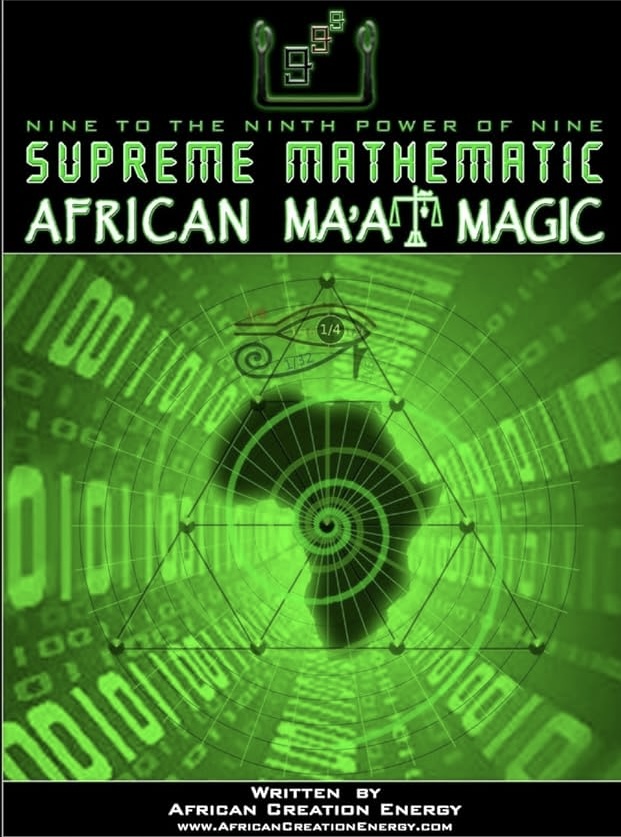
Supreme Mathematics: African Ma’at Magic 


Supreme Mathematics: African Ma’at Magic really challenges how we think about math. It’s not just numbers, formulas, or something you learned in school—it’s presented as a way of thinking. The book explains that mathematics actually comes out of African civilizations as a tool to understand reality—things like space, energy, time, and matter. So instead of seeing math as abstract, it becomes something very real… a way to break things down, and more importantly, build understanding from what you see around you.
 

At the center of the book is the concept of Ma’at, which represents truth, balance, and order. The author connects this directly to mathematics—showing that when you’re using logic, structure, and reasoning, you’re really aligning yourself with truth. And when you’re dealing with probability, you’re navigating uncertainty. So math becomes more than calculation—it becomes a way to bring clarity to confusion… to take scattered pieces and put them into a system that actually makes sense.
 

And that’s one of the things that stood out to me personally. The idea that understanding doesn’t just happen—you build it. You take pieces of information, experiences, observations… and you start putting two and two together. That process of addition—of connecting dots and layering meaning—is really what this book is encouraging. It’s not just about solving problems, it’s about seeing relationships and constructing insight.
 

The book also highlights how deeply mathematics was embedded in African culture—through architecture, engineering, and even spiritual systems like sacred geometry. It shows that math wasn’t separate from life—it was part of everything. And that reinforces a bigger message: math is a tool for creation. It’s something you use to design, innovate, and shape reality.
 

At the end of the day, this book is a call to reclaim mathematics—not just academically, but mentally and culturally. It’s about using math as a tool for empowerment, for independence, and for building systems that actually reflect who you are. And more than anything, it reminds you that real understanding comes from what you add together—the connections you make, the patterns you recognize, and the meaning you build over time.


Click the image below to secure your copy!

#ReadingIsDOPE

#DOPEBookshelf

#YouDoTheMath

04/22/2026

  • Leave a comment
  • Share
    Supreme Mathematics: African Ma’at Magic

    Share link

in Books , Reading, Philosophy , Psychology, Influence , Teaching , Education, Mathematics , Spirituality , Supreme Mathematics , Culture

Using Music as an Instructional Tool 


Using Music as an Instructional Tool presents music as an intentional component of instructional systems design rather than background enhancement. The infoline explains how music can increase attention, reduce anxiety, support emotional engagement, and improve memory when aligned with learning objectives. By influencing mood and cognitive readiness, music helps create learning environments that are more receptive, structured, and memorable.


A particularly useful contribution of the infoline is its breakdown of how different musical genres affect learning in different ways. It notes that instrumental and classical music can support focus and analytical thinking, ambient music can reduce stress and encourage reflection, and upbeat styles can energize collaborative or interactive activities. This genre-based framework helps instructors move beyond intuition and select music that supports specific instructional goals.


However, the infoline’s portrayal of rap as primarily energetic or angry highlights an important limitation in genre-based categorization. While that description may apply to certain subgenres, it does not represent rap as a whole, nor does it reflect the broader emotional and instructional range found within Hip Hop culture—especially given that many learners do not separate the two. Conscious rap, jazz rap, lo-fi hip hop, narrative-driven, and instrumental forms can support reflection, storytelling, language development, and deep engagement, particularly for culturally connected learners.


This insight ultimately strengthens the instructional model. Rather than relying solely on genre labels, effective instructional design evaluates musical characteristics such as tempo, rhythm, lyrical density, emotional tone, and cultural relevance. When applied thoughtfully, rap and hip hop function as powerful, culturally responsive instructional tools. Recognizing this diversity expands the infoline’s framework and reinforces the idea that music—when chosen with intention—can align emotion, cognition, and culture into a more inclusive and effective learning experience.


#DOPEBookshelf

#ReadingIsDOPE

#DOPEMusicTherapy

12/14/2025

  • Leave a comment
  • Share
    Using Music as an Instructional Tool

    Share link

in Music , Purpose, Pop Culture, Psychology, Hip Hop, Teaching , Education, Audio Engineering , Hip-Hop

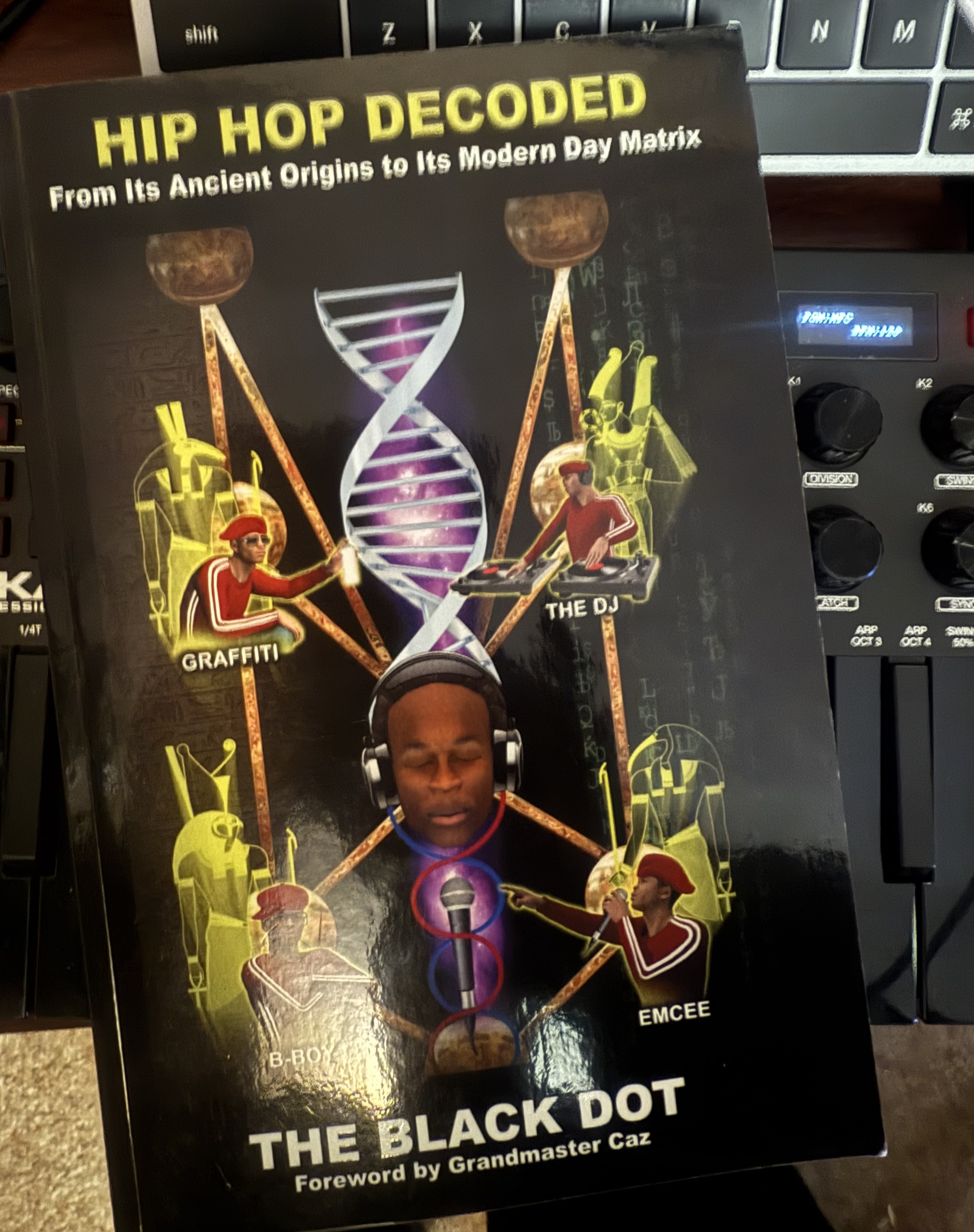
Hip Hop Decoded by The Black Dot 


Hip Hop Decoded argues that hip hop is not simply a musical genre but the rebirth of an ancient African cultural system rooted in rhythm, cosmology, spiritual science, and communal storytelling. The Black Dot traces hip hop’s essence to ancestral practices where sound, movement, and vibration were used to shape consciousness and connect with higher realms. Modern hip hop—through emceeing, DJing, breaking, graffiti, and ciphers—represents a continuation of this ancient frequency, re-emerging in a new form. At its core, he asserts, hip hop is a metaphysical technology, a coded language that carries spiritual knowledge disguised within contemporary expression.


The book also examines how hip hop operates inside what The Black Dot refers to as “the matrix,” a system of corporate, political, and media forces designed to exploit, redirect, and weaponize cultural energy. As hip hop’s influence grew, these forces sought to distort its original purpose, replacing consciousness with materialism and revolutionary spirit with commodified entertainment. To illustrate how powerful energies are manipulated on a global scale, The Black Dot highlights the metaphysical significance of the name Michael, meaning “Who is like God?” He argues that the simultaneous rise of Michael Jordan, Michael Jackson, and Mike Tyson during the 1980s and early 1990s was not accidental—it represented the embodiment of a divine warrior archetype manifesting in modern form.


Each of these men became a symbol of Black excellence operating at a godlike level: Jordan as the heroic athlete, Jackson as the otherworldly performer, and Tyson as the unstoppable warrior. Yet, all three experienced dramatic and highly publicized downfalls around the mid-1990s. According to The Black Dot, this synchronicity reflects a symbolic ritual—a deliberate cultural “humbling” of the “Michael” archetype. Their trials, accusations, scandals, or tragedies were not isolated incidents but part of a broader metaphysical pattern in which forces within the matrix seek to diminish or destabilize figures who carry too much spiritual or cultural power. In this reading, the fall of these three Michaels served to disrupt the collective belief in Black godhood, reminding the world that no figure is allowed to rise unchecked.


Ultimately, Hip Hop Decoded is a call for the reclamation of hip hop’s spiritual and revolutionary essence. By decoding the symbolism embedded in the culture and recognizing the systems that work to manipulate it, individuals can reclaim their creative power and restore hip hop to its role as a vehicle for enlightenment. The Black Dot urges artists and listeners alike to awaken to the deeper metaphysical currents running through the culture, to understand the coded messages hidden in plain sight, and to use hip hop as a tool of liberation rather than a product of control.


Click the image below to get yours!

#ReadingIsDOPE

#DOPEBookshelf

11/24/2025

  • Leave a comment
  • Share
    Hip Hop Decoded by The Black Dot

    Share link

in Reading, Music , Purpose, Morality, Pop Culture, Media , Psychology, Influence , Hip Hop, Conspiracies , Teaching , Conspiracy Theories , Education, Marketing, Leadership, Spirituality , Strategy, Social Psychology, Supreme Mathematics , Hip-Hop, Culture

Moses and Monotheism by Sigmund Freud: 

In Moses and Monotheism, Sigmund Freud presents one of his most provocative theories: that Moses, the foundational figure of Judaism, was not Hebrew but an Egyptian noble who followed the monotheistic reforms of Pharaoh Akhenaten. Freud argues that the strict, abstract monotheism Moses taught—centered on a single, invisible God—bears closer resemblance to Egyptian Aten worship than to the surrounding Semitic religions of the time. According to Freud, Moses selected a Semitic group, led them out of Egypt, and imposed this austere religious system on them.


Freud then advances a controversial psychohistorical claim: the Israelites eventually rebelled against Moses’ authoritarian leadership and killed him. This collective act of violence, he argues, was repressed and buried within the group’s cultural memory, much like traumatic events are repressed within individuals. Over generations, however, the memory of Moses and his strict monotheism returned in symbolic form, resurfacing through prophetic traditions and later religious reforms. For Freud, the eventual triumph of monotheism was a delayed reawakening of Moses’ original message.
 

Drawing on psychoanalytic concepts, Freud interprets religious development as a process shaped by repression, guilt, and the longing for a powerful father figure. He argues that God functions psychologically as an internalized father, and that Judaism’s moral demands reflect an inherited sense of obligation rooted in the repressed trauma of killing Moses. This dynamic, he claims, also influenced the emergence of Christianity, which further transformed the relationship between guilt, redemption, and the father figure.


Ultimately, Freud positions monotheism not simply as a religious evolution but as a psychological one. He suggests that the origins of Judaism—and by extension Western religious thought—can be understood through the mechanisms of cultural memory and collective trauma. Although heavily speculative, Moses and Monotheism remains significant for its attempt to merge psychoanalysis with religious history, challenging traditional narratives and proposing a radical reinterpretation of one of the world’s most influential faith traditions.
 

#DOPEBookshelf

#ReadingIsDOPE

#AudioBooksAreDOPE

11/21/2025

  • Leave a comment
  • Share
    Moses and Monotheism by Sigmund Freud:

    Share link

in Audiobooks , Morality, Psychology, Conspiracy Theories , Spirituality

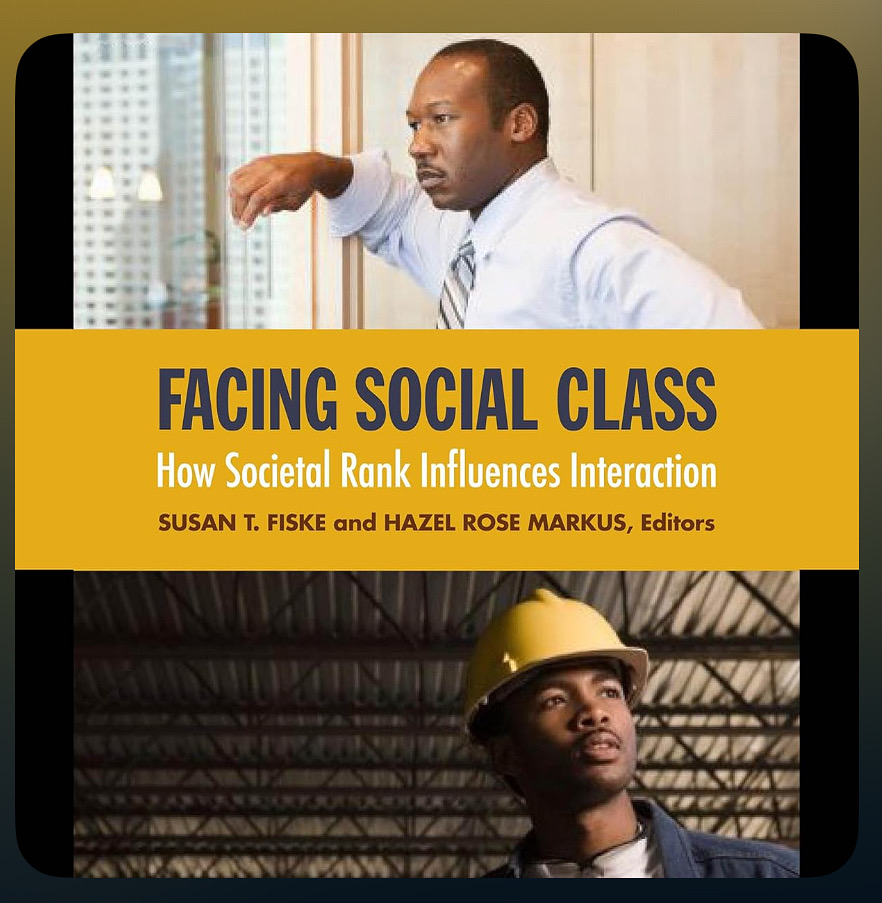
Facing Social Class: How Societal Rank Influences Interaction by Susan Fiske and Hazel Rose Markus 


When we think about inequality, we often jump straight to race or gender. But in Facing Social Class, Susan Fiske and Hazel Rose Markus remind us that social class is just as powerful in shaping people’s lives. Class isn’t just about how much money you make—it affects your values, your behaviors, and even how you see yourself and others. The book gives us a clear lens to understand how class operates as a hidden force in everyday life.


One of the key points they make is that class differences show up in how people communicate and relate. Folks from working-class backgrounds often emphasize community and “we,” while middle- and upper-class individuals tend to highlight independence and “me.” Neither is better or worse, but when these values clash—whether in schools, workplaces, or health care—they can create misunderstandings that reinforce stereotypes and widen divides.i


The authors also show how institutions often reflect upper-class norms, which makes it harder for working-class individuals to feel included or to succeed. Think about how schools reward certain types of speech, or how corporations expect certain “professional” behaviors. These aren’t neutral—they reflect cultural values of higher social classes. To create fairness, institutions have to adapt and recognize the strengths of different class perspectives instead of forcing everyone into one mold.


In the end, Facing Social Class isn’t just a critique—it’s a call to action. By paying attention to class, we can better understand how opportunity is distributed, challenge our own assumptions, and work to bridge divides. Fiske and Markus encourage us to build empathy across class lines and push for structures that allow everyone—not just the privileged few—to thrive.


#AudioBooksAreDOPE

#DOPEBookshelf

#ReadingIsDOPE


09/16/2025

  • Leave a comment
  • Share
    Facing Social Class: How Societal Rank Influences Interaction by Susan Fiske and Hazel Rose Markus

    Share link

in Audiobooks , Media , Psychology, Influence , Education, Social Psychology, Social Class

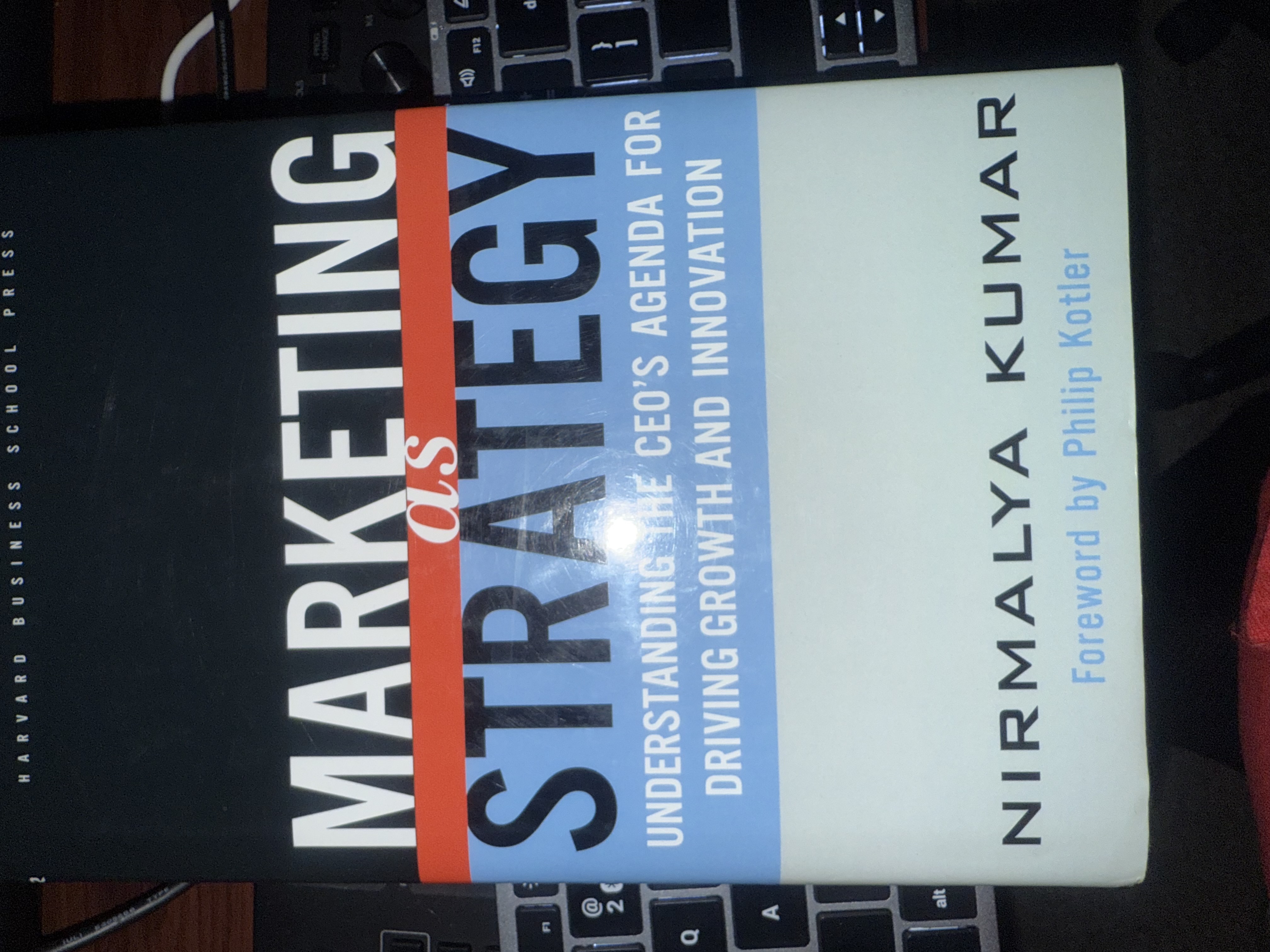
Marketing As Strategy: Understanding the CEO’s Agenda for Driving Growth and Innovation by Nirmalya Kumar  

In Marketing as Strategy, Nirmalya Kumar challenges the conventional role of marketing as just advertising and promotions. He argues that marketing should be at the core of business strategy—helping drive growth, innovation, and long-term value creation. The book is a bold call for marketers to align themselves with the CEO’s agenda and actively shape the future of the company, not just react to it.


One of the most insightful concepts Kumar introduces is the difference between market-drivenand market-driving companies. Market-driven firms respond to existing customer needs and competitor moves. In contrast, market-driving companies—like Apple or Tesla—reshape markets, create new customer demands, and lead the way with innovation. This distinction hits home for many entrepreneurs and creatives who realize they’ve naturally taken the market-driving path—leading change rather than following it.


Kumar also outlines how companies can restructure their marketing around customer segments rather than product lines, how to grow customer share instead of just market share, and why marketers must become fluent in financial language to have real influence in the boardroom. He shows how these ideas work in practice with case studies from global firms like Tesco and Samsung.


Ultimately, Marketing as Strategy empowers marketers to think bigger. It’s not just about branding—it’s about driving strategy, shaping demand, and becoming a key force behind sustainable business success.


Click the image to get your copy!!

#ReadingIsDOPE

#DOPEBookshelf


0:00/???
  1. Marketing as Strategy Audio Summary
Subscribe with iTunes RSS feed Download

08/04/2025

  • Leave a comment
  • Share
    Marketing As Strategy: Understanding the CEO’s Agenda for Driving Growth and Innovation by Nirmalya Kumar

    Share link

in Books , Reading, Psychology, Influence , Marketing, Strategy

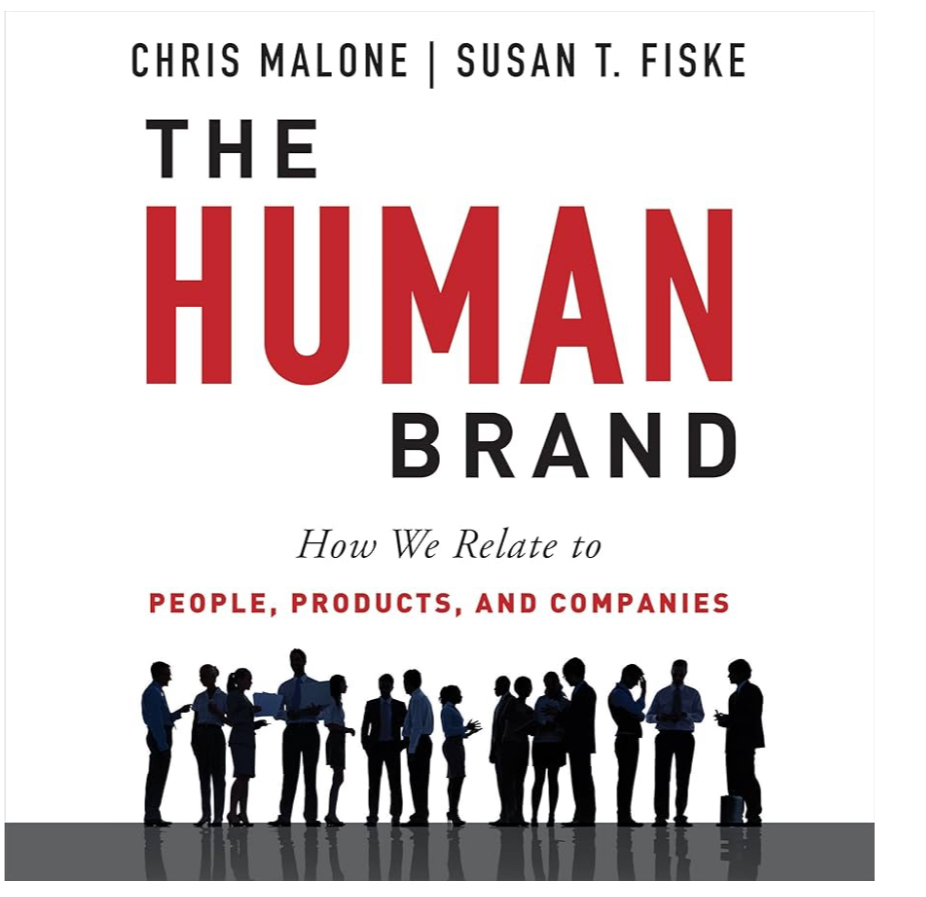
The Human Brand: How We Relate to People, Products, and Companies (Audiobook) by Chris Malone and Susan T. Fiske 

In The Human Brand, Chris Malone and Susan T. Fiske reveal a timeless truth: people judge companies and brands the same way they judge other people — through the lens of warmth and competence. Warmth shows customers you care about their well-being and have good intentions; competence shows you can actually deliver on what you promise. Just like the old saying goes, “People don’t care what you know until they know that you care.” Without warmth, even the most skilled company can feel cold and transactional, driving customers away instead of drawing them in.


The authors share vivid examples of brands that get this balance right, like Zappos, Starbucks, and Amazon — companies that show up consistently, do what they say they will do, and treat customers like human beings, not just dollar signs. In our digital age, customers have more power than ever to hold companies accountable. A lack of genuine care is hard to hide and quick to backfire. But when brands act with authenticity and empathy, they spark the kind of trust and loyalty that traditional marketing alone can’t buy.


Reading this really hits home because it reminds us to look at our own businesses and ask: Do my customers feel like I genuinely care? The warmth-and-competence lens can be a simple but powerful gut check. It’s not about grand gestures — it’s often the little things: listening more, being honest when things go wrong, and treating people like people. Those small moments add up to relationships that last.


Ultimately, The Human Brand is a call to remember that business, at its core, is human. Technology may change how we connect, but trust is still built the old-fashioned way — by showing you care and following through on your word. Brands that embrace this simple truth won’t just survive; they’ll stand out and thrive.


#DOPEAudiobooks

#DOPEBookshelf

#ReadingIsDOPE


07/09/2025

  • Leave a comment
  • Share
    The Human Brand: How We Relate to People, Products, and Companies (Audiobook) by Chris Malone and Susan T. Fiske

    Share link

in Books , Audiobooks , Psychology, Influence , Education, Leadership, Strategy, Social Psychology

Brainwashed: Challenging the Myth of Black Inferiority by Tom Burrell (Audiobook Edition)  

In Brainwashed, veteran advertising executive Tom Burrell confronts one of the most damaging lies in American history: the myth of Black inferiority. Drawing from his background in media and marketing, Burrell argues that centuries of racist messaging—delivered through advertising, entertainment, education, and religion—have conditioned both Black and non-Black people to subconsciously accept this falsehood as truth. He contends that this psychological programming has had long-lasting effects on Black identity, behavior, and self-worth.


A key focus of the book is how music, movies, and pop culture reinforce harmful stereotypes and normalize dysfunction within Black communities. Burrell explains how these messages often glorify violence, hypersexuality, and materialism—contributing to internalized self-hate and destructive behaviors. He makes the case that these portrayals not only shape how others view Black people, but more dangerously, how Black people see themselves. This internalization leads to cycles of self-sabotage, fractured families, and even violence within the community.


Burrell challenges the idea that these behaviors are not natural or cultural, insisting instead that they are learned responses to centuries of psychological warfare. He describes this condition as a kind of mental enslavement—rooted not in biology or personal failure, but in a deliberate system of manipulation that spans generations.


Brainwashed is not just an exposé but a call to action. Burrell encourages listeners to become aware of the programming, reject negative narratives, and reclaim their cultural identity. He advocates for healing through education, critical thinking, and conscious media consumption, offering a path toward liberation from the lies that have long distorted the Black experience.


#ReadingIsDOPE

#AudioBooksAreDOPE

0:00/???
  1. Brainwashed Audio Summary
Subscribe with iTunes RSS feed Download

05/28/2025

  • Leave a comment
  • Share
    Brainwashed: Challenging the Myth of Black Inferiority by Tom Burrell (Audiobook Edition)

    Share link

in Books , Reading, Audiobooks , Pop Culture, Media , Psychology, Influence , Conspiracies , Education, Marketing

Motivating Black Males to Achieve in School and in Life by Baruti K. Kafele  

Motivating Black Males to Achieve in School and in Life by Baruti K. Kafele is a powerful guide for educators aiming to improve outcomes for Black male students. Drawing from decades of experience as a teacher and principal, Kafele addresses the cultural, social, and psychological factors that impact the academic performance and self-perception of Black males. He argues that their challenges are not just academic but also tied to identity and societal influences, and that educators must approach their work with intention, empathy, and cultural understanding.


The book emphasizes the importance of self-reflection for educators, urging them to examine their own biases and teaching practices. Kafele outlines practical strategies for creating empowering learning environments, including mentorship programs, culturally relevant instruction, and strong student-teacher relationships. He highlights the need for schools to not only educate but also affirm the worth and potential of Black male students, helping them navigate societal pressures and see themselves as capable, valuable, and destined for success.


In this easy to read guide, Kafele offers both a challenge and a blueprint—asking educators to rethink how they engage with Black males, while providing tools to support their academic and personal growth. His message is clear: when Black males are inspired, affirmed, and understood, they can and will achieve greatness both in school and in life.


#ReadingIsDOPE


0:00/???
  1. Audio Summary
Subscribe with iTunes RSS feed Download

05/19/2025

  • Leave a comment
  • Share
    Motivating Black Males to Achieve in School and in Life by Baruti K. Kafele

    Share link

in Books , Reading, Manhood, Child Development, Mental Health, Thoughts Become Reality, Positive Thinking , Purpose, Psychology, Influence , Black Boys, Teaching , Educati9n

The Psychological Covert War on Hip Hop by Professor Griff  

The Psychological Covert War on Hip Hop by Professor Griff


In The Psychological Covert War on Hip Hop, Professor Griff — a founding member of the revolutionary rap group Public Enemy — delivers a hard-hitting analysis of how Hip Hop has been manipulated and weaponized by powerful entities to influence the minds and behaviors of Black youth.

Griff argues that Hip Hop, once a powerful tool for awakening, resistance, and social change, has been systematically infiltrated and redirected by corporate, political, and covert intelligence interests. He draws from historical, psychological, and sociopolitical sources to suggest that mainstream rap music has been turned into a psychological operation (psy-op), aimed at promoting violence, hypersexuality, materialism, and self-destruction among its listeners.


Key themes in the book include:

1. Cultural Hijacking – Griff contends that corporations and media moguls have stripped hip hop of its revolutionary roots and replaced it with a commodified version that glorifies negativity and distracts from systemic oppression.

2. Mind Control & Symbolism – The book explores the use of subliminal messaging, occult symbols, and psychological techniques embedded in music, videos, and imagery to manipulate public perception and behavior.

3. Historical Parallels – Griff connects the manipulation of hip hop to historical examples of government surveillance and control, such as COINTELPRO, drawing a line from the targeting of civil rights leaders to the co-optation of Black music and culture.

4. Responsibility & Reclamation – While exposing the mechanisms of control, Griff also challenges artists, listeners, and community leaders to reclaim hip hop as a force for consciousness, empowerment, and liberation.


Throughout the book, Professor Griff’s tone is militant, unapologetic, and intellectually provocative. He combines personal experiences, insider knowledge of the music industry, and a deep dive into psychological warfare tactics to awaken readers to what he believes is a hidden war being waged through one of the most influential cultural forces in the world.

The book ultimately serves as a wake-up call — not only to fans of hip hop, but to all who care about the impact of media on the minds and spirits of generations to come.

Click here to purchase your own!,

#ReadingIsDOPE

0:00/???
  1. Covert War On Hip Hop Summary
Subscribe with iTunes RSS feed Download

05/17/2025

  • Leave a comment
  • Share
    The Psychological Covert War on Hip Hop by Professor Griff

    Share link

in Books , Reading, Music , Pop Culture, Media , Psychology, Influence , Hip Hop, Conspiracies

Media Psychology: Understanding & Navigating the Media’s Unconscious Influence 

Media Psychology: Understanding & Navigating the Media’s Unconscious Influence

This audiobook consists of multiple lectures that address different forms of media and how they affect those who consume them. The author, Douglas Gentile, is a professor and developmental psychologist.

A majority of the lectures dive into how different media sources affect developmental processes in adults and children. For example, there’s a strong relationship between children who consume violent media (video games, movies, etc) and criminal records in adulthood. I’m sure that’s no shocker…lol

However, another study found that children who watched Sesame Street in their youth earned higher grades in high school. This indicates that positive media can have a positive long term influence on society as a whole. But why is it that we tend to be attracted to more negative media??

He breaks this phenomenon down along with many more gems for you. If that sounds intriguing, this is the audiobook for you.

#ReadingIsDOPE

#DOPEAudiobooks

12/17/2024

  • Leave a comment
  • Share
    Media Psychology: Understanding & Navigating the Media’s Unconscious Influence

    Share link

in Books , Child Development, Audiobooks , Media , Psychology, Video Games, Influence

Follow ya DREAMS, Embrace OPPORTUNITIES, Find ya PURPOSE & Seek EDUCATION

 #BeDOPEbyAnyMeans

Gifted Unique Individuals Livin' Life Accomplishin' (#Guilla4Life)

Some images ©

  • Log out