• A DOPE Theme
  • Guilla4Life Radio
    • Reading Is D.O.P.E. Podcast
  • A D.O.P.E. Mission....
  • Reading Is D.O.P.E. Book Boxes
  • D.O.P.E. Digital University
  • The D.O.P.E. Bookshelf
  • D.O.P.E. Merch and More
  • D.O.P.E. Reading Programs
    • Metro East Literacy Project
    • The Literacy Center
  • Contact Us

Guilla Boyz Entertainment, L.L.C.

notes
0:00/???
  1. 1
    Sunday Night Soul (1-8-23) 2:01:53
    Sunday Night Soul (1-8-23)
    by G4L Radio

    Share link

    0:00/2:01:53
  2. 2
    Sunday Night Soul (8-28-22) 1:57:27
    Sunday Night Soul (8-28-22)
    by G4L Radio

    Share link

    0:00/1:57:27
  3. 3
    Sunday Night Soul (5-22-22) 1:59:51
    Sunday Night Soul (5-22-22)
    by G4L Radio

    Share link

    0:00/1:59:51
  4. 4
    Sunday Night Soul 11-7-21 2:01:55
    Sunday Night Soul 11-7-21
    by G4LRadio

    Share link

    0:00/2:01:55
  5. 5
    Sunday Night Soul (4-18--21) 1:56:42
    Sunday Night Soul (4-18--21)
    by GB Radio

    Share link

    0:00/1:56:42
  6. 6
    Sunday Night Soul (5-8-22) 1:53:54
    Sunday Night Soul (5-8-22)
    by G3L Radio

    Share link

    0:00/1:53:54
  7. 7
    Sunday Night Soul (5-2-21) 2:02:27
    Sunday Night Soul (5-2-21)
    by GB Radio

    Share link

    0:00/2:02:27
  8. 8
    Sunday Night Soul (5-9-21) 2:01:55
    Sunday Night Soul (5-9-21)
    by GB Radio

    Share link

    0:00/2:01:55
  9. 9
    Sunday Night Soul (5-8-22) 1:53:54
    Sunday Night Soul (5-8-22)
    by G4L Radio

    Share link

    0:00/1:53:54
  10. 10
    Sunday Night Soul (5-16-21) 2:01:27
    Sunday Night Soul (5-16-21)
    by GB Radio

    Share link

    0:00/2:01:27
  11. 11
    Sunday Night Soul (12-26-21) 1:58:37
    Sunday Night Soul (12-26-21)
    by G4L Radio

    Share link

    0:00/1:58:37
  12. 12
    Sunday Night Soul (2-20-21 1:59:42
    Sunday Night Soul (2-20-21
    by GB Radio

    Share link

    0:00/1:59:42
  13. 13
    Sunday Night Soul (4-25-21) 2:16:41
    Sunday Night Soul (4-25-21)
    by GB Radio

    Share link

    0:00/2:16:41
0:00/???
  • A DOPE Theme
  • Guilla4Life Radio
    • Reading Is D.O.P.E. Podcast
  • A D.O.P.E. Mission....
  • Reading Is D.O.P.E. Book Boxes
  • D.O.P.E. Digital University
  • The D.O.P.E. Bookshelf
  • D.O.P.E. Merch and More
  • D.O.P.E. Reading Programs
    • Metro East Literacy Project
    • The Literacy Center
  • Contact Us

Viewing: Spirituality - View all posts

The Mathematics of the Mind by Nuri Muhammad 


The Mathematics of the Mind by Nuri Muhammad explores how the thoughts we entertain ultimately shape the lives we experience. Although the title uses the language of mathematics, the book isn’t really about numbers. It’s about mental equations—what we add to our minds, what we need to subtract, what we repeatedly multiply through attention, and the outcomes those calculations eventually produce. Muhammad’s basic argument is that if we want different results in our lives, we must examine the thinking that created our current results.
 

Throughout the book, Muhammad presents the mind as both powerful and sacred, but also vulnerable to outside influence. Every thought, suggestion, image, and opinion competing for our attention should not automatically be accepted as truth. We must place a guard over the mind and consciously decide which ideas deserve to take root. A negative belief about ourselves may appear insignificant at first, but when it is repeatedly reinforced, it can affect our confidence, habits, relationships, finances, health, and sense of purpose.
 

One of the book’s most memorable ideas comes through a quote from the Honorable Minister Louis Farrakhan: “The more sincere the motive, the more sustained the action.” That statement explains why motivation alone often fades. When our actions are based on appearances, pressure, or temporary emotion, they become difficult to maintain. But when the motive is sincere—when it is connected to purpose, conviction, and a genuine desire to transform—the action has a much stronger foundation. In mathematical terms, the internal cause determines the durability of the external result.
 

Ultimately, The Mathematics of the Mind teaches that changing your life requires more than simply thinking positively. It requires thinking deliberately. We must trace our actions back to their originating thoughts, examine the motives behind them, and calculate where they are likely to lead. Muhammad’s message is that we are not powerless spectators in our own development. By guarding the mind, correcting our internal equations, and aligning sincere motives with disciplined action, we can become active participants in shaping our destiny.

Click the image below to get your copy!,


#ReadingIsDOPE

#MathematicsOfTheMind

08/23/2026

  • Leave a comment
  • Share
    The Mathematics of the Mind by Nuri Muhammad

    Share link

in Books , Reading, Manhood, Thoughts Become Reality, Purpose, Philosophy , Psychology, Influence , Education, Leadership, Mathematics , Spirituality , Supreme Mathematics , Culture, Cognitive Behavioral Therapy , Psychitecture

I Am by Howard Falco 

Howard Falco’s I AM explores the power hidden in the words “I Am” and argues that they act as declarations that shape the way people see themselves and ultimately experience life. Falco suggests that whatever follows those two words becomes an internal script: I am capable, I am defeated, I am successful, I am growing. These statements become more than thoughts — they become identities that influence decisions, emotions, and actions. Reading this book revealed an interesting parallel to the early #IAmGUIILA movement because it was never simply a hashtag or brand phrase; it functioned as a personal creed designed to reinforce identity and movement.
 

Within the G.U.I.L.L.A. philosophy (Gifted. Unique. Individual. Livin’ Life Accomplishin’), the emphasis was never on a fixed definition of success. Instead, it centered on the idea that each person possesses unique value and should pursue goals according to their own path and purpose. The “Accomplishin’” aspect was intentionally flexible because accomplishments evolve over time and vary from person to person. In many ways, this mirrors Falco’s message that identity is not about becoming someone else, but consciously choosing who you already are and how you will show up in the world.
 

As the journey evolved, the philosophy expanded through the D.O.P.E. framework (Dreams. Opportunities. Purpose. Education), which can be viewed as the four pillars supporting the G.U.I.L.L.A. foundation. If G.U.I.L.L.A. answers who I am, then D.O.P.E. answers how I build. Dreams define vision, Opportunities create pathways, Purpose gives meaning, and Education becomes the mechanism for growth. Together they form a progression: Identity → Direction → Execution → Impact.
 

Viewed through that lens, I AM becomes more than a book about affirmations or positive thinking. It becomes a reminder that identity is foundational. The ultimate takeaway is not simply to repeat words, but to live them: GUILLA is who I am. DOPE is how I build. Impact is why I do it. Because a creed is not a destination — it is a standard for how you show up every day.

Click the link below to get your copy…..

#DOPEBookshelf

#ReadingIsDOPE

#IAmGuilla


05/22/2026

  • Leave a comment
  • Share
    I Am by Howard Falco

    Share link

in Books , Reading, Thoughts Become Reality, Purpose, Philosophy , Influence , Education, Spirituality , Cognitive Behavioral Therapy

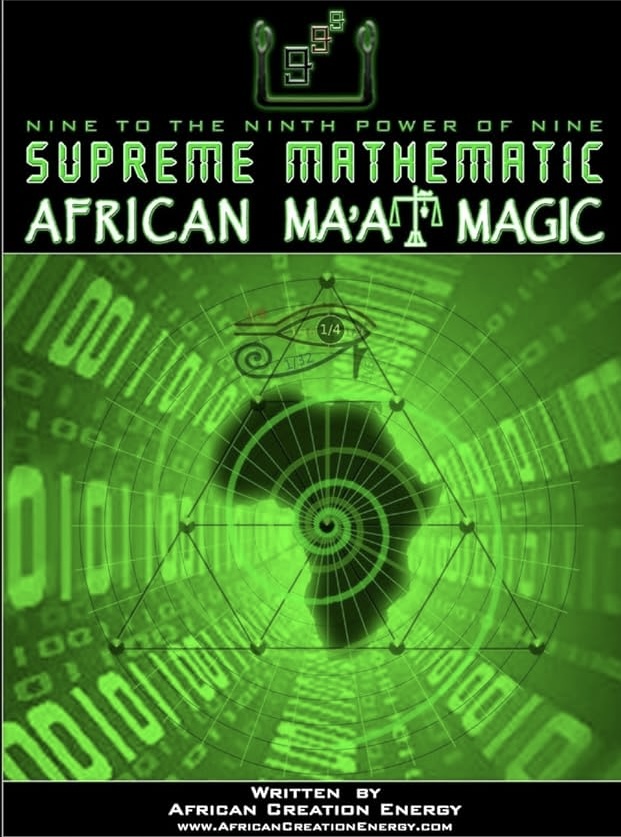
Supreme Mathematics: African Ma’at Magic 


Supreme Mathematics: African Ma’at Magic really challenges how we think about math. It’s not just numbers, formulas, or something you learned in school—it’s presented as a way of thinking. The book explains that mathematics actually comes out of African civilizations as a tool to understand reality—things like space, energy, time, and matter. So instead of seeing math as abstract, it becomes something very real… a way to break things down, and more importantly, build understanding from what you see around you.
 

At the center of the book is the concept of Ma’at, which represents truth, balance, and order. The author connects this directly to mathematics—showing that when you’re using logic, structure, and reasoning, you’re really aligning yourself with truth. And when you’re dealing with probability, you’re navigating uncertainty. So math becomes more than calculation—it becomes a way to bring clarity to confusion… to take scattered pieces and put them into a system that actually makes sense.
 

And that’s one of the things that stood out to me personally. The idea that understanding doesn’t just happen—you build it. You take pieces of information, experiences, observations… and you start putting two and two together. That process of addition—of connecting dots and layering meaning—is really what this book is encouraging. It’s not just about solving problems, it’s about seeing relationships and constructing insight.
 

The book also highlights how deeply mathematics was embedded in African culture—through architecture, engineering, and even spiritual systems like sacred geometry. It shows that math wasn’t separate from life—it was part of everything. And that reinforces a bigger message: math is a tool for creation. It’s something you use to design, innovate, and shape reality.
 

At the end of the day, this book is a call to reclaim mathematics—not just academically, but mentally and culturally. It’s about using math as a tool for empowerment, for independence, and for building systems that actually reflect who you are. And more than anything, it reminds you that real understanding comes from what you add together—the connections you make, the patterns you recognize, and the meaning you build over time.


Click the image below to secure your copy!

#ReadingIsDOPE

#DOPEBookshelf

#YouDoTheMath

04/22/2026

  • Leave a comment
  • Share
    Supreme Mathematics: African Ma’at Magic

    Share link

in Books , Reading, Philosophy , Psychology, Influence , Teaching , Education, Mathematics , Spirituality , Supreme Mathematics , Culture

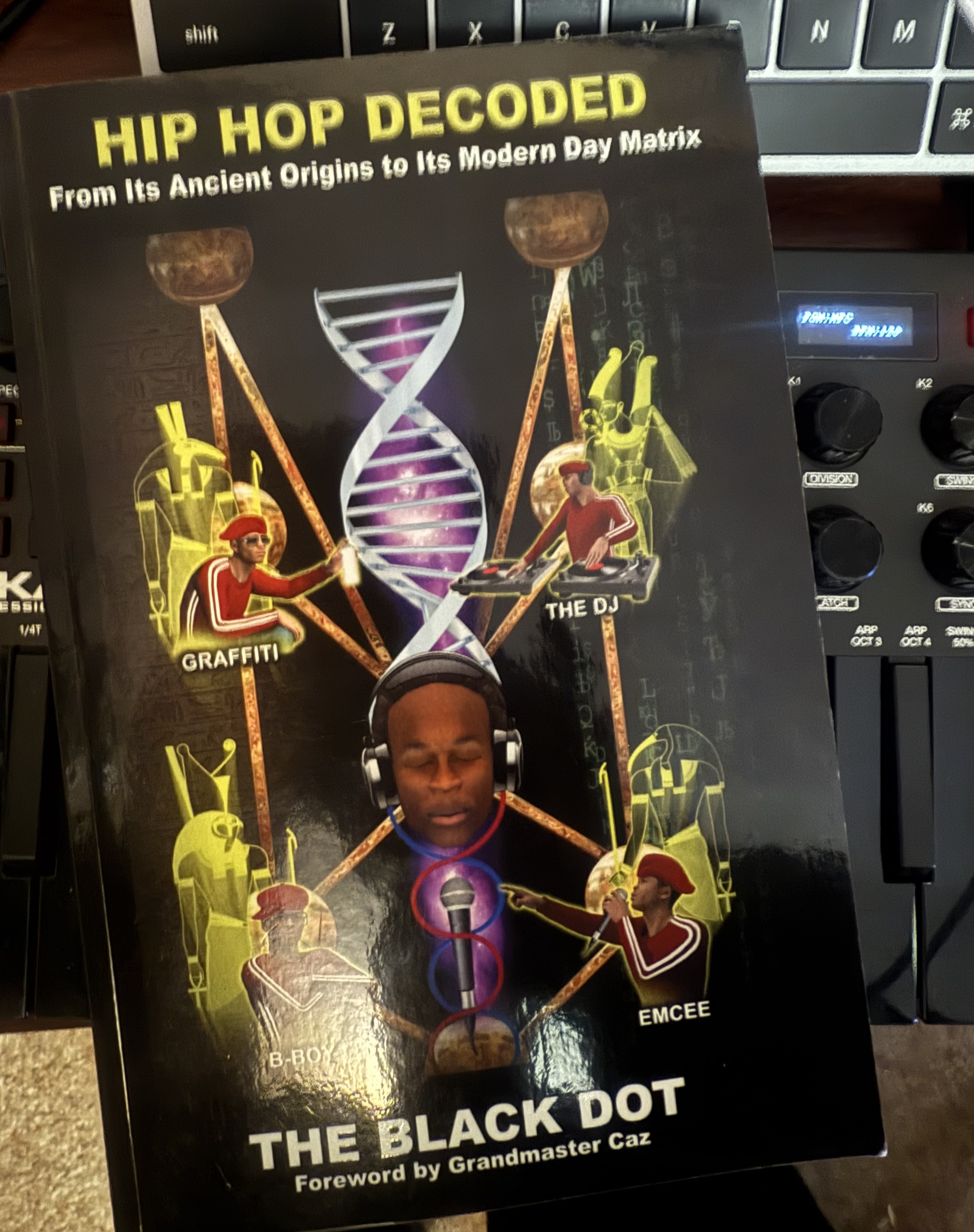
Hip Hop Decoded by The Black Dot 


Hip Hop Decoded argues that hip hop is not simply a musical genre but the rebirth of an ancient African cultural system rooted in rhythm, cosmology, spiritual science, and communal storytelling. The Black Dot traces hip hop’s essence to ancestral practices where sound, movement, and vibration were used to shape consciousness and connect with higher realms. Modern hip hop—through emceeing, DJing, breaking, graffiti, and ciphers—represents a continuation of this ancient frequency, re-emerging in a new form. At its core, he asserts, hip hop is a metaphysical technology, a coded language that carries spiritual knowledge disguised within contemporary expression.


The book also examines how hip hop operates inside what The Black Dot refers to as “the matrix,” a system of corporate, political, and media forces designed to exploit, redirect, and weaponize cultural energy. As hip hop’s influence grew, these forces sought to distort its original purpose, replacing consciousness with materialism and revolutionary spirit with commodified entertainment. To illustrate how powerful energies are manipulated on a global scale, The Black Dot highlights the metaphysical significance of the name Michael, meaning “Who is like God?” He argues that the simultaneous rise of Michael Jordan, Michael Jackson, and Mike Tyson during the 1980s and early 1990s was not accidental—it represented the embodiment of a divine warrior archetype manifesting in modern form.


Each of these men became a symbol of Black excellence operating at a godlike level: Jordan as the heroic athlete, Jackson as the otherworldly performer, and Tyson as the unstoppable warrior. Yet, all three experienced dramatic and highly publicized downfalls around the mid-1990s. According to The Black Dot, this synchronicity reflects a symbolic ritual—a deliberate cultural “humbling” of the “Michael” archetype. Their trials, accusations, scandals, or tragedies were not isolated incidents but part of a broader metaphysical pattern in which forces within the matrix seek to diminish or destabilize figures who carry too much spiritual or cultural power. In this reading, the fall of these three Michaels served to disrupt the collective belief in Black godhood, reminding the world that no figure is allowed to rise unchecked.


Ultimately, Hip Hop Decoded is a call for the reclamation of hip hop’s spiritual and revolutionary essence. By decoding the symbolism embedded in the culture and recognizing the systems that work to manipulate it, individuals can reclaim their creative power and restore hip hop to its role as a vehicle for enlightenment. The Black Dot urges artists and listeners alike to awaken to the deeper metaphysical currents running through the culture, to understand the coded messages hidden in plain sight, and to use hip hop as a tool of liberation rather than a product of control.


Click the image below to get yours!

#ReadingIsDOPE

#DOPEBookshelf

11/24/2025

  • Leave a comment
  • Share
    Hip Hop Decoded by The Black Dot

    Share link

in Reading, Music , Purpose, Morality, Pop Culture, Media , Psychology, Influence , Hip Hop, Conspiracies , Teaching , Conspiracy Theories , Education, Marketing, Leadership, Spirituality , Strategy, Social Psychology, Supreme Mathematics , Hip-Hop, Culture

Moses and Monotheism by Sigmund Freud: 

In Moses and Monotheism, Sigmund Freud presents one of his most provocative theories: that Moses, the foundational figure of Judaism, was not Hebrew but an Egyptian noble who followed the monotheistic reforms of Pharaoh Akhenaten. Freud argues that the strict, abstract monotheism Moses taught—centered on a single, invisible God—bears closer resemblance to Egyptian Aten worship than to the surrounding Semitic religions of the time. According to Freud, Moses selected a Semitic group, led them out of Egypt, and imposed this austere religious system on them.


Freud then advances a controversial psychohistorical claim: the Israelites eventually rebelled against Moses’ authoritarian leadership and killed him. This collective act of violence, he argues, was repressed and buried within the group’s cultural memory, much like traumatic events are repressed within individuals. Over generations, however, the memory of Moses and his strict monotheism returned in symbolic form, resurfacing through prophetic traditions and later religious reforms. For Freud, the eventual triumph of monotheism was a delayed reawakening of Moses’ original message.
 

Drawing on psychoanalytic concepts, Freud interprets religious development as a process shaped by repression, guilt, and the longing for a powerful father figure. He argues that God functions psychologically as an internalized father, and that Judaism’s moral demands reflect an inherited sense of obligation rooted in the repressed trauma of killing Moses. This dynamic, he claims, also influenced the emergence of Christianity, which further transformed the relationship between guilt, redemption, and the father figure.


Ultimately, Freud positions monotheism not simply as a religious evolution but as a psychological one. He suggests that the origins of Judaism—and by extension Western religious thought—can be understood through the mechanisms of cultural memory and collective trauma. Although heavily speculative, Moses and Monotheism remains significant for its attempt to merge psychoanalysis with religious history, challenging traditional narratives and proposing a radical reinterpretation of one of the world’s most influential faith traditions.
 

#DOPEBookshelf

#ReadingIsDOPE

#AudioBooksAreDOPE

11/21/2025

  • Leave a comment
  • Share
    Moses and Monotheism by Sigmund Freud:

    Share link

in Audiobooks , Morality, Psychology, Conspiracy Theories , Spirituality

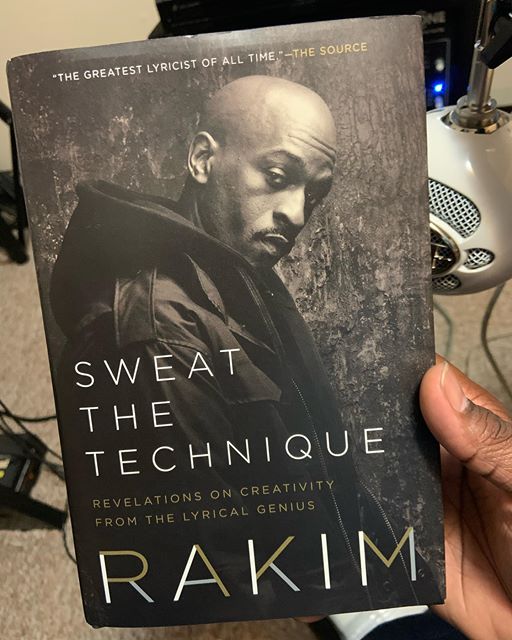
SWEAT THE TECHNIQUE: REVELATIONS ON CREATIVITY FROM THE LYRICAL GENIUS 


In “Sweat The Technique”, the God MC, Rakim, shares his life story and discusses his career’s progression. Hailing from a small town in New York named Wyandanch, Rakim (born William Michael Griffin, Jr.) was a mischievous kid from a musical background, who also enjoyed sports for most of his childhood. He played football for most of his childhood and teen years, but music proved to be his true calling. Coming from a musical family meant that he was always around it and almost destined to adopt the craft for himself.


When he first began rapping, he went by the name Kid Wizard and later changed to Rakim as he delved deeper into the studies of the 5 Percent Nation. He met Eric B. through Eric’s close friend and roommate, Marley Marl. They released four albums as a duo, in which Rakim was the DJ and Eric was the DJ. Rakim felt that he was meant to teach thru his music and put more of the teachings into his rhymes with each successive album. Eric B and Rakim released 4 albums as a duo and was the first hip hop act to secure a $1 Million record deal.


When he and Eric parted ways, Rakim released 3 more solo albums, where he injected even more of his teachings into the rhymes, despite the changing hip-hop landscape. In this book, he breaks down some of his writing techniques that he uses in some of his songs, along with other spiritual concepts and philosophies that he lives by. This a definitely a good read for true fans of the culture as well as aspiring MC’s alike...


#HipHopIsLife

#ReadingIsDOPE

09/21/2025

  • Leave a comment
  • Share
    SWEAT THE TECHNIQUE: REVELATIONS ON CREATIVITY FROM THE LYRICAL GENIUS

    Share link

in Books , Reading, Manhood, Music , Philosophy , Influence , Hip Hop, Teaching , Education, Mathematics , Spirituality , Audio Engineering , Supreme Mathematics , Hip-Hop, Culture

The Book of Five Rings by Miyamoto Musashi  

The Book of Five Rings is a timeless guide to strategy and self-mastery, written by legendary samurai Miyamoto Musashi in 1645. Drawing on his undefeated career in dueling, Musashi outlines a philosophy of discipline, adaptability, and mental clarity that transcends swordsmanship and applies to all walks of life.
 

The book is divided into five parts—Earth, Water, Fire, Wind, and Void—each symbolizing a key aspect of strategy. Earth lays the foundation, stressing the importance of fundamentals and self-discipline. Water teaches adaptability, encouraging fluidity in thought and action. Fire deals with the heat of battle, focusing on tactics, timing, and disrupting the opponent’s rhythm.


In the Wind book, Musashi critiques other schools of thought, emphasizing the need to understand different perspectives while remaining true to one’s path. Finally, the Void represents the state of pure intuition—where mastery transcends technique, and the practitioner acts without conscious effort.
 

At its core, Musashi’s work is about mastering the inner battle—controlling the mind, embracing stillness, and learning to move with purpose. Whether in martial arts, business, or life, The Book of Five Rings remains a powerful meditation on clarity, focus, and the warrior spirit.


Click the image below to get your copy!
 

#ReadingIsDOPE

0:00/???
  1. The Book of 5 Rings Summary
Subscribe with iTunes RSS feed Download

06/22/2025

  • Leave a comment
  • Share
    The Book of Five Rings by Miyamoto Musashi

    Share link

in Books , Philosophy , Influence , Education, Leadership, Spirituality , Strategy, Combat

The Five Percenters: Islam, Hip-Hop and the Gods of New York by Michael Muhammad Knight 

Michael Muhammad Knight dives into the world of the Five Percent Nation, a movement that split from the Nation of Islam in the 1960s under the leadership of Clarence 13X, later known as Father Allah. The Five Percenters believe that the Black man is God, the Black woman is Earth, and that 85% of people are misled, 10% know the truth but exploit it, while the 5% are the righteous teachers working to enlighten the world.


Knight explores the core teachings of the group, such as Supreme Mathematics, Supreme Alphabet, and cipher-building—a language system that helps members decode the world around them. The movement intentionally rejects organized religion, instead offering a form of street-centered, self-empowering spirituality that emphasizes knowledge of self and divine identity.


A major focus of the book is how the Five Percenters influenced hip-hop culture. From Rakimand Big Daddy Kane to Wu-Tang Clan, Nas, and Busta Rhymes, many legendary artists infused Five Percenter teachings into their lyrics, slang, and imagery—often embedding deep messages in coded language understood only by the initiated.


Knight, a white Muslim convert himself, offers a unique lens—one that’s part participant, part observer. He reflects on his own complicated position while addressing deeper questions around race, gender roles, authenticity, and appropriation. The book doesn’t shy away from the movement’s contradictions, but it highlights how the Five Percenters offered young Black men in particular a powerful identity rooted in divinity, dignity, and purpose.


Ultimately, The Five Percenters is a story about more than theology—it’s about the creation of an alternative universe where knowledge is sacred, language is power, and self-realization is revolutionary.


Tap the image below to learn more….


#ReadingIsDOPE


06/15/2025

  • Leave a comment
  • Share
    The Five Percenters: Islam, Hip-Hop and the Gods of New York by Michael Muhammad Knight

    Share link

in Books , Philosophy , Morality, Pop Culture, Influence , Hip Hop, Teaching , Education, Leadership, Mathematics , Spirituality

Follow ya DREAMS, Embrace OPPORTUNITIES, Find ya PURPOSE & Seek EDUCATION

 #BeDOPEbyAnyMeans

Gifted Unique Individuals Livin' Life Accomplishin' (#Guilla4Life)

Some images ©

  • Log out